Buying your first luxury watch is exciting and a little frightening, because the amount of money is real and the ways to get it wrong are not obvious to a newcomer. The good news: the process is learnable, and a few clear rules will keep you from the expensive mistakes almost everyone makes once.
This is the guide we wish every first-time buyer read before they walked into a boutique or opened a marketplace tab. It is about how to buy, not just what to buy.
The short answer: Set a real budget, decide new versus pre-owned with eyes open, buy the seller before you buy the watch, and prioritize the things you cannot change later (case size, movement, condition) over the things you can. Spend more time on authentication than on picking the exact model.
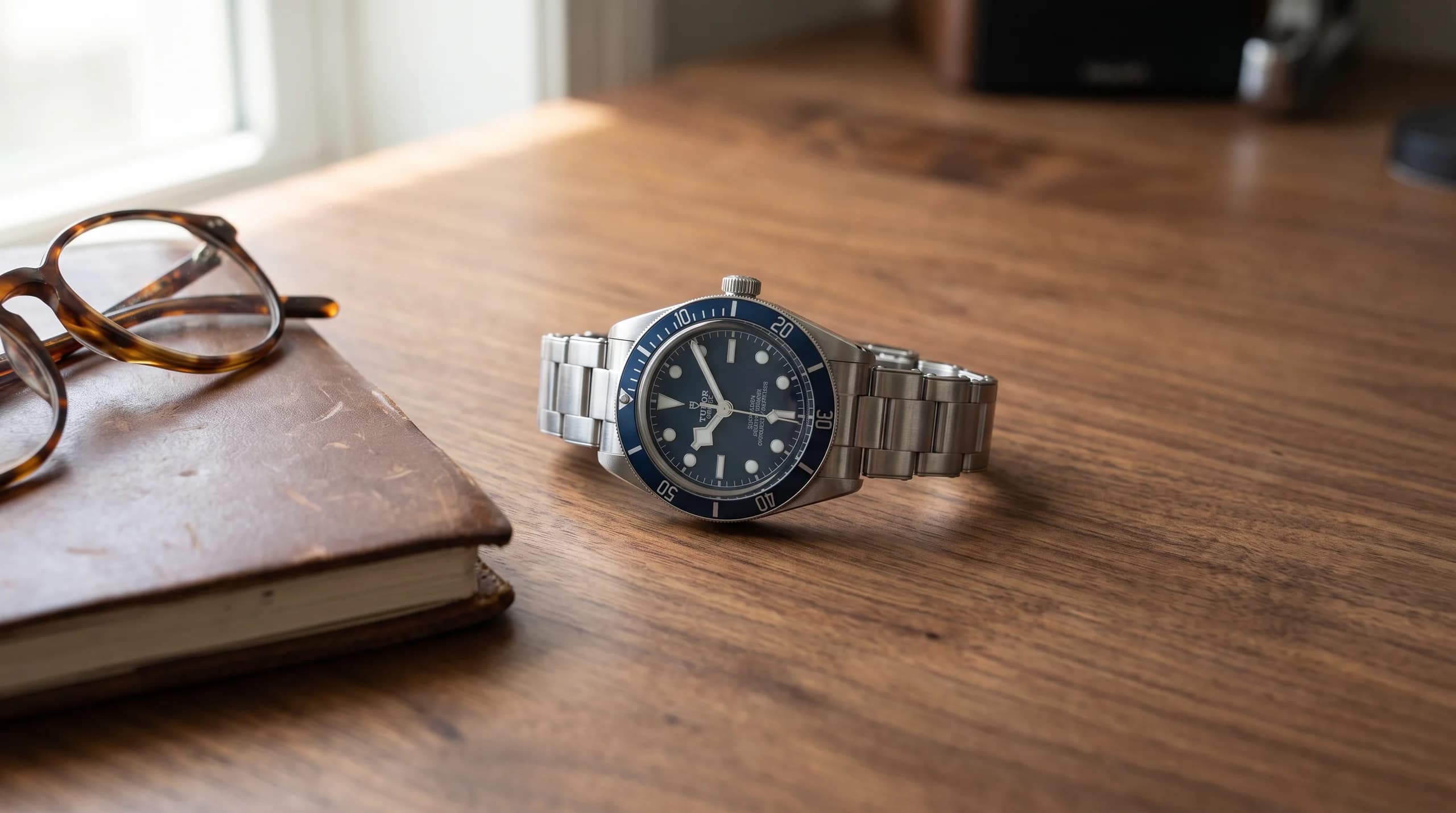
The images in this article were generated by AI using real reference photography of the Tudor Black Bay 58 to keep the proportions and detailing accurate. They are illustrations, not photographs of specific inventory.
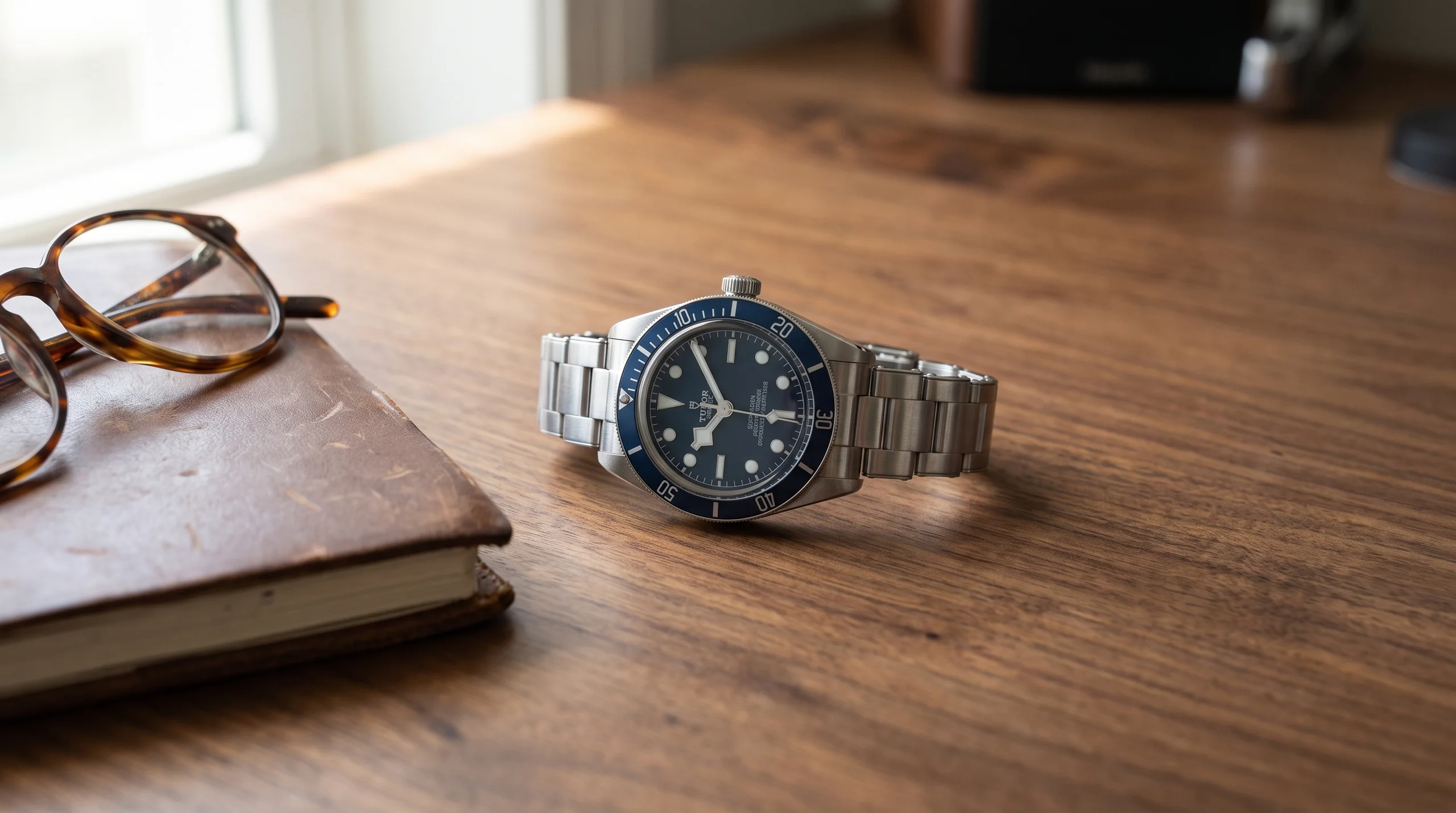 The Tudor Black Bay 58 is the watch nearly every guide names first for a reason. It is the running example in this piece.
Start With A Real Budget, Not A Dream Number
The first mistake is anchoring on a watch before a number. Pick the number first, and make it the all-in number, because the sticker is never the whole cost.
A luxury watch carries costs beyond purchase: sales tax, the occasional strap or bracelet swap, and service every five to seven years that can run several hundred to over a thousand dollars depending on the brand. Budget for the watch to live with you, not just to arrive.
What Different Budgets Actually Buy
Your budget sets the shelf you are shopping, so it helps to know what each shelf holds.
| Budget | What it realistically buys |
|---|---|
| Under $2,000 | Longines, Hamilton, Oris, Tissot, entry Seiko and Grand Seiko |
| $2,000 to $4,000 | Tudor Black Bay 58, Longines Spirit, Oris Aquis, Omega on pre-owned |
| $4,000 to $8,000 | Omega Seamaster and Speedmaster, Grand Seiko, entry Rolex on pre-owned |
| $8,000 and up | Rolex steel sports, entry Cartier and IWC, pre-owned Omega precious metal |
For a first watch, most buyers are happiest in the $2,000 to $4,000 band. The Tudor Black Bay 58 sits right in it, at roughly $3,525 new and $2,800 to $3,200 pre-owned, with an in-house COSC movement and a 70-hour power reserve, per market trackers like Loupe.
New Versus Pre-Owned: The Real Trade-Off
This is the decision that trips up most first-timers, and the honest answer is that pre-owned wins on value for almost everyone.
A new watch from an authorized dealer gives you a full manufacturer warranty, an untouched piece, and the boutique experience. What it costs you is depreciation. Most watches lose value the moment they leave the counter, and outside a handful of hyped steel Rolex and Patek models, that drop is real.
Why Pre-Owned Is The Smart First Move
Buying pre-owned lets someone else absorb that first hit. A Tudor trades roughly 20% to 35% below retail on the secondary market, which means the pre-owned buyer gets the same watch and skips the steepest part of the depreciation curve.
The catch is authentication, and that is exactly why the seller matters more than the listing. There is also a middle path worth knowing: manufacturer certified pre-owned programs, which we broke down in our guide to Rolex Certified Pre-Owned. And if you are weighing a discounted new watch from an unofficial seller, read our explainer on how the grey market actually works first.
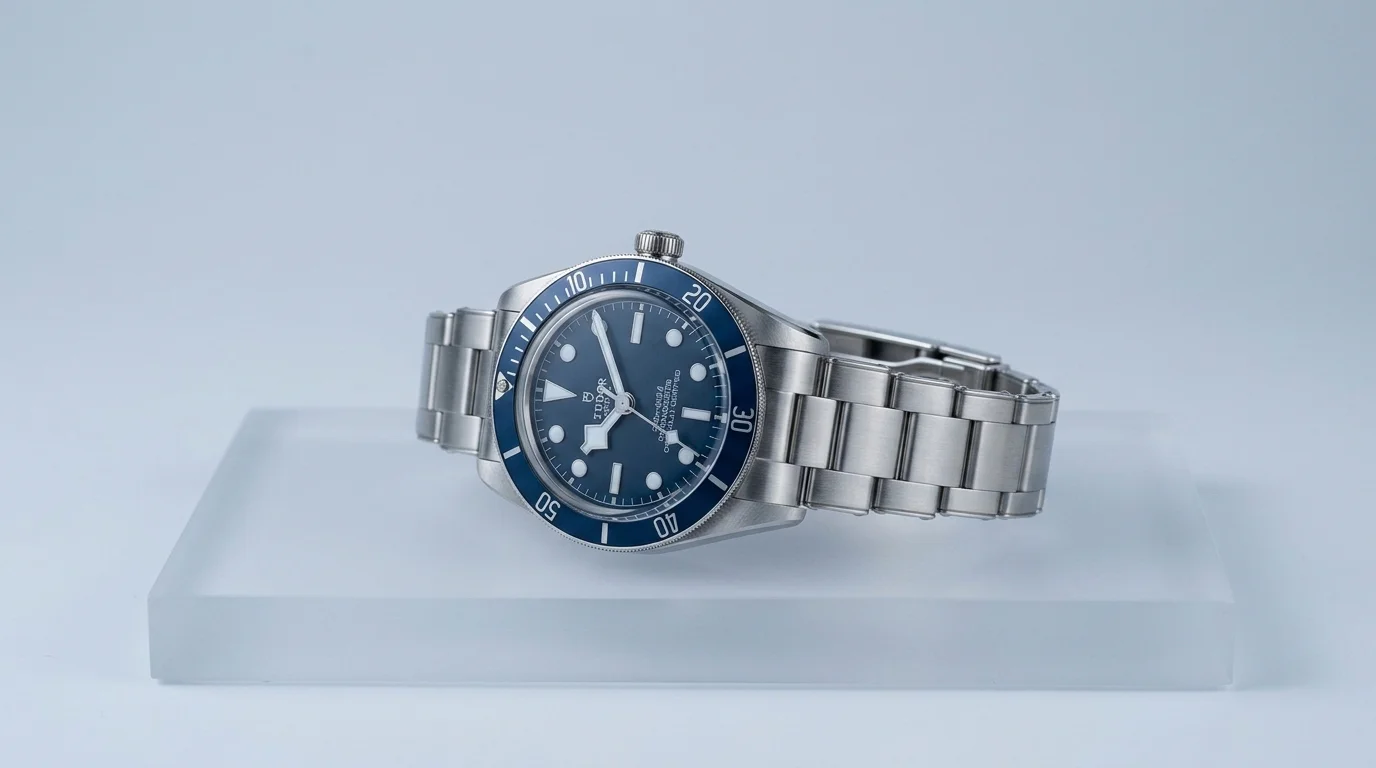 At $2,800 to $3,200 pre-owned, the Black Bay 58 lets someone else eat the first depreciation hit.
Buy The Seller Before You Buy The Watch
Here is the rule that protects your money more than any other: vet who you are buying from before you fall for a specific watch.
The fake watch market is sophisticated, and photos are easy to fake. A trustworthy seller, on the other hand, is verifiable. This applies whether you buy new or pre-owned.
Green Flags In A Seller
Look for signals that the seller stands behind the watch and has nothing to hide.
- A clear return or authentication guarantee in writing
- Real, consistent history and reviews you can trace
- Detailed photos of the actual watch, including the movement and serial areas
- Willingness to answer specific questions about condition and service history
- A physical business or established track record, not a brand-new anonymous account
Red Flags To Walk Away From
Some signals should end the conversation.
- A price meaningfully below every other listing for the same reference
- Pressure to move off-platform or pay by irreversible methods
- Stock photos instead of the actual watch
- Vague or evasive answers about papers, service, or origin
Prioritize What You Cannot Change Later
When you get to picking the actual watch, spend your attention on the permanent things.
Case size and proportions are permanent. A watch that is too big or too thick for your wrist will sit in a drawer no matter how good the deal was, so the single most useful measurement is often lug-to-lug, not diameter. The Black Bay 58 earns its reputation partly on this: at 39mm wide and 11.9mm thick, it fits a wide range of wrists.
Movement And Condition Are Worth Paying For
The movement is the engine, and it is not something you upgrade later. An in-house or well-regarded workhorse movement with a chronometer rating is worth prioritizing over a flashier dial.
Condition is the other permanent factor. An over-polished case with soft, rounded edges cannot be un-polished, and it quietly costs you value. Water resistance is easy to misread too, which is why it pays to understand what those depth ratings really mean before you assume a watch can swim.
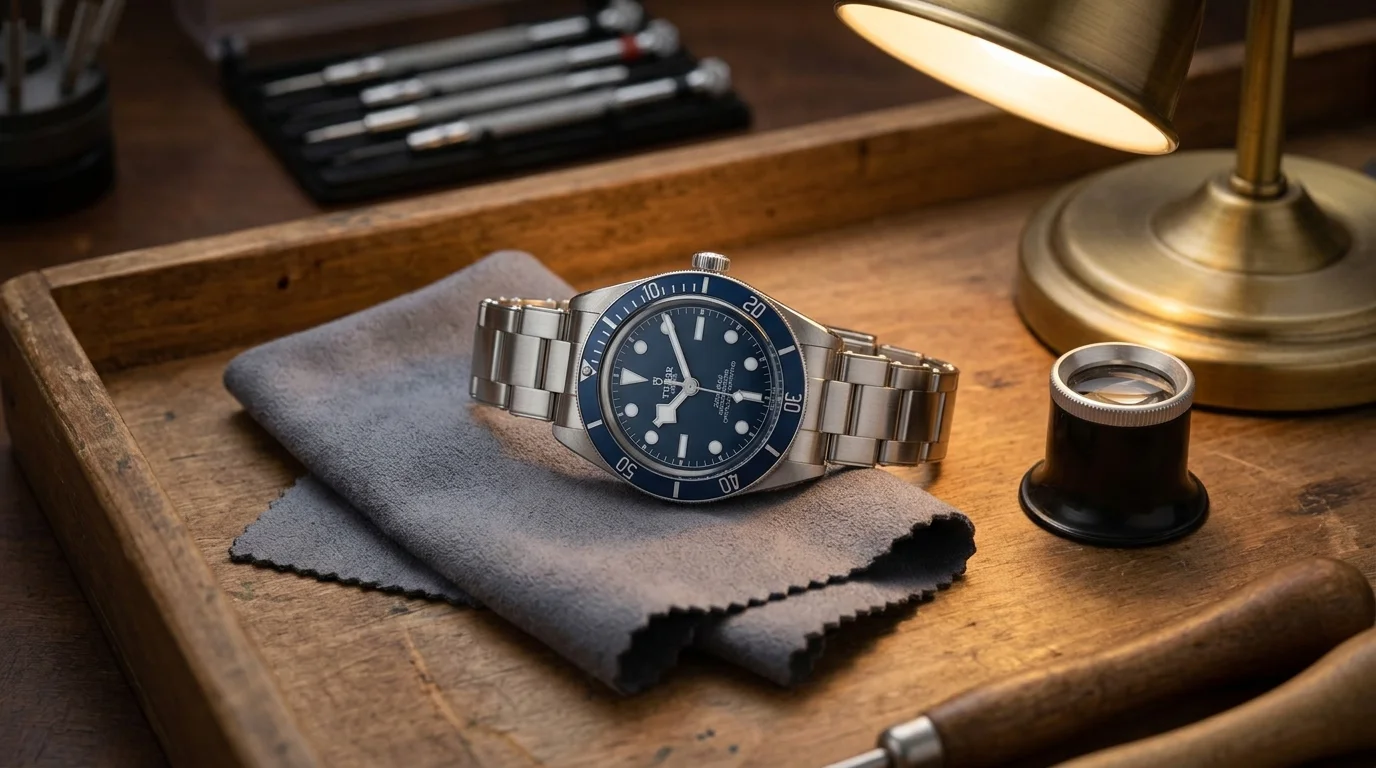 Spend more time on authentication and condition than on choosing the exact model. The permanent things matter most.
Buy The One You Will Actually Wear
The last rule is the most personal. A first luxury watch that lives in a safe because you are afraid to scratch it is a bad purchase, however good the specs.
Buy something water resistant enough and tough enough for your real life, and buy a design you genuinely like rather than the one a forum told you was correct. A versatile steel sports watch or a clean everyday piece will get worn far more than a fragile precious-metal dress watch you baby.
A Sensible First-Watch Shortlist
If you want a starting point rather than the entire market, a few models come up again and again for good reasons. The Tudor Black Bay 58 is the safe, do-everything answer. The Omega Seamaster and Speedmaster reward buyers who care about resale and heritage. And for pure value, Longines is quietly the best deal in Swiss watchmaking, often for well under the price of the others.
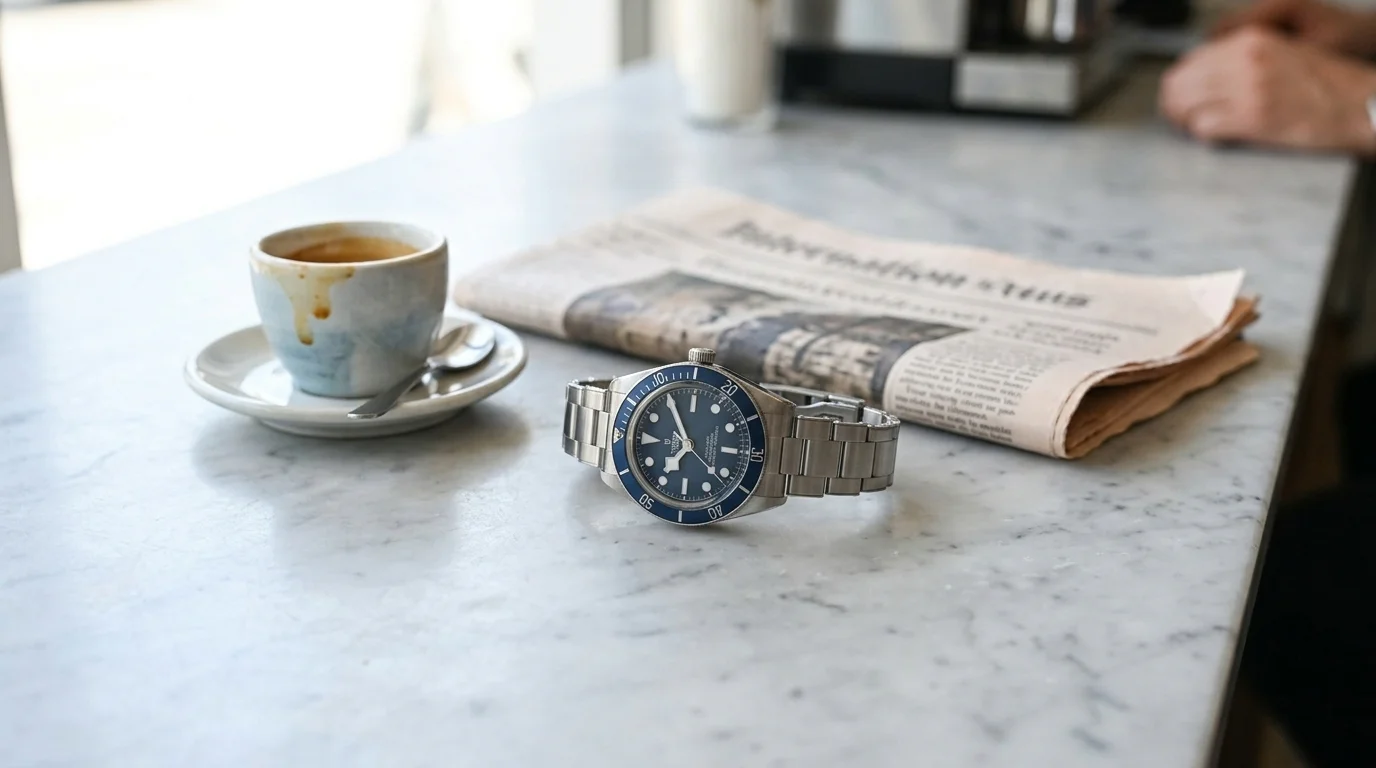 The best first watch is the one that ends up on your wrist every day, not the one that stays in the box.
The Whole Thing In One Line
Set an all-in budget, lean pre-owned to skip the depreciation, vet the seller harder than the watch, prioritize size, movement, and condition, and buy something you will actually wear. Do those five things and your first luxury watch will be a purchase you are glad you made, not one you quietly regret.
When you are ready to look, you can browse authenticated pre-owned Tudor at 5dwatches.com, Black Bay 58 included, and put these rules to work.
Frequently Asked Questions
What is the best first luxury watch?
The Tudor Black Bay 58 is the answer most guides land on, at roughly $3,525 new and $2,800 to $3,200 pre-owned, with an in-house COSC movement and a 39mm case that fits most wrists. Strong alternatives include the Omega Seamaster and Speedmaster for resale and heritage, and Longines for pure value.
Should I buy new or pre-owned for my first luxury watch?
Pre-owned wins on value for almost everyone. A new watch carries a full warranty and the boutique experience, but you eat the first depreciation hit. Buying pre-owned lets someone else absorb that drop, often 20% to 35% below retail, as long as you authenticate carefully.
How much should I budget for a first luxury watch?
Budget the all-in number, not just the sticker: add sales tax, the odd strap, and service every five to seven years that can run several hundred to over a thousand dollars. Most first-time buyers are happiest in the $2,000 to $4,000 band.
How do I avoid buying a fake watch?
Vet the seller before the watch. Look for a written return or authentication guarantee, a traceable track record, and detailed photos of the actual watch including the movement. Walk away from prices far below every other listing, pressure to pay off-platform, and stock photos.
What should I prioritize when choosing a first watch?
Prioritize the things you cannot change later: case size and lug-to-lug fit, the movement, and the condition of the case. An over-polished case cannot be un-polished. Spend less energy on the exact dial and more on getting an honest, well-proportioned, authenticated example.