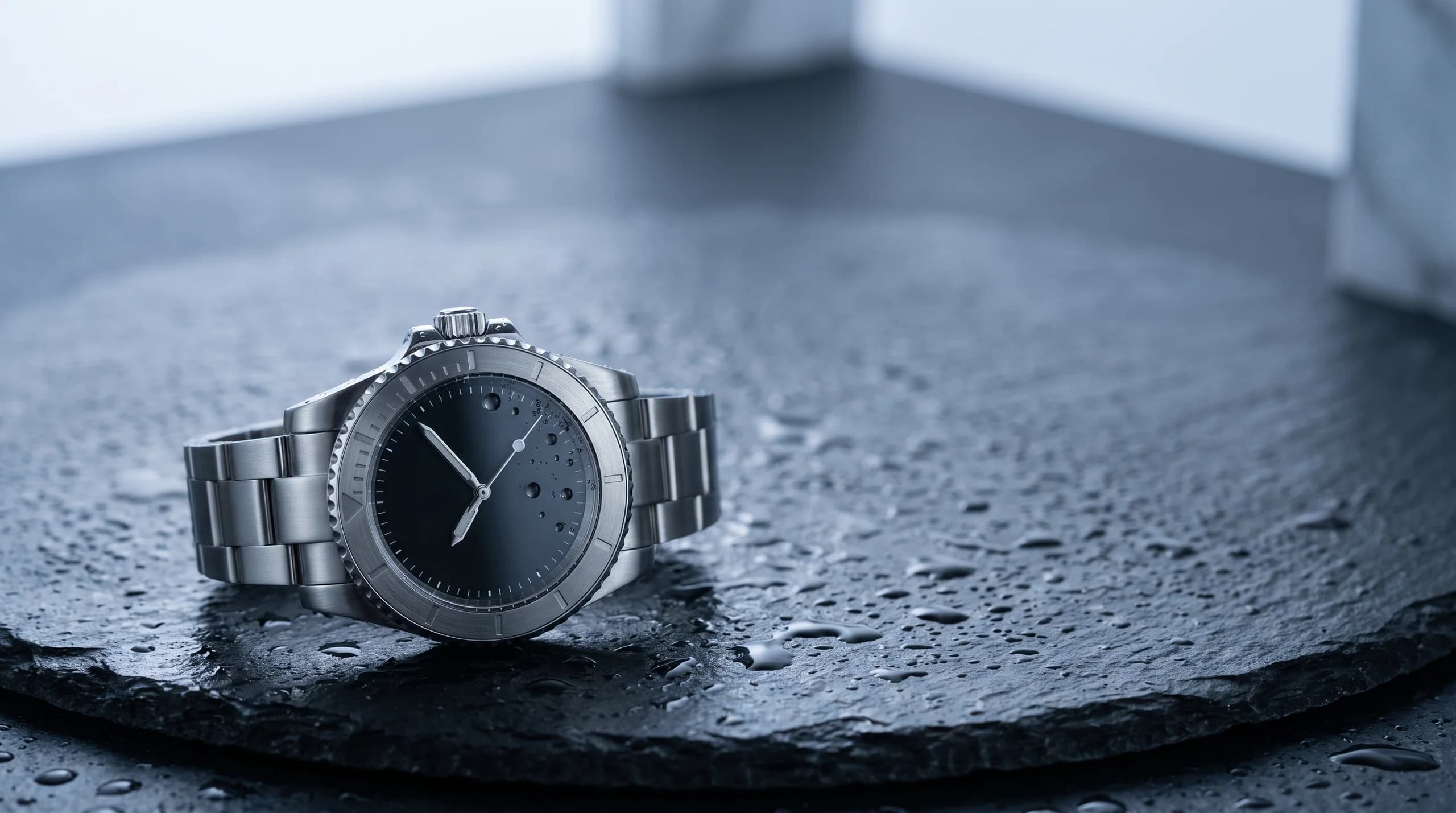
The water resistance number on your watch is the most misunderstood spec in watchmaking, and misreading it is one of the most common avoidable ways people ruin an otherwise good watch. A watch stamped "30m" has never been 30 meters underwater in testing, and it will flood if you swim in it. The number is a laboratory pressure rating, not a depth you can visit.
Once you understand what that number actually describes, reading it becomes simple, and you stop making the mistakes that send watches to the repair bench. Here is how water resistance really works, and what each rating lets you do.
The images in this article are AI-generated illustrations created for editorial purposes. They are not photographs of a specific watch offered for sale.
The short answer: the depth number is the static pressure a sample watch survived in a lab, not a depth you can safely reach. As a rough real-world guide, 30m handles splashes only, 50m handles everyday wear and brief shallow contact, 100m is fine for swimming and snorkeling, and 200m or more with ISO 6425 certification is a true dive watch. Movement in the water pushes real pressure well above the number, seals age, and no watch is "waterproof." Have the seals pressure-tested every one to two years.
The number is a pressure test, not a depth
Every water resistance rating is the result of a static pressure test. Sample watches from a production batch are placed in still water and subjected to a pressure equivalent to the marked depth, and they must not leak. As Wikipedia's summary of the standard puts it, the marking indicates the static test pressure a sample was exposed to, not a depth the watch was designed to reach. The governing standard for everyday watches is ISO 22810, which the ISO describes as covering daily use and swimming, while a separate, stricter standard covers actual diving.
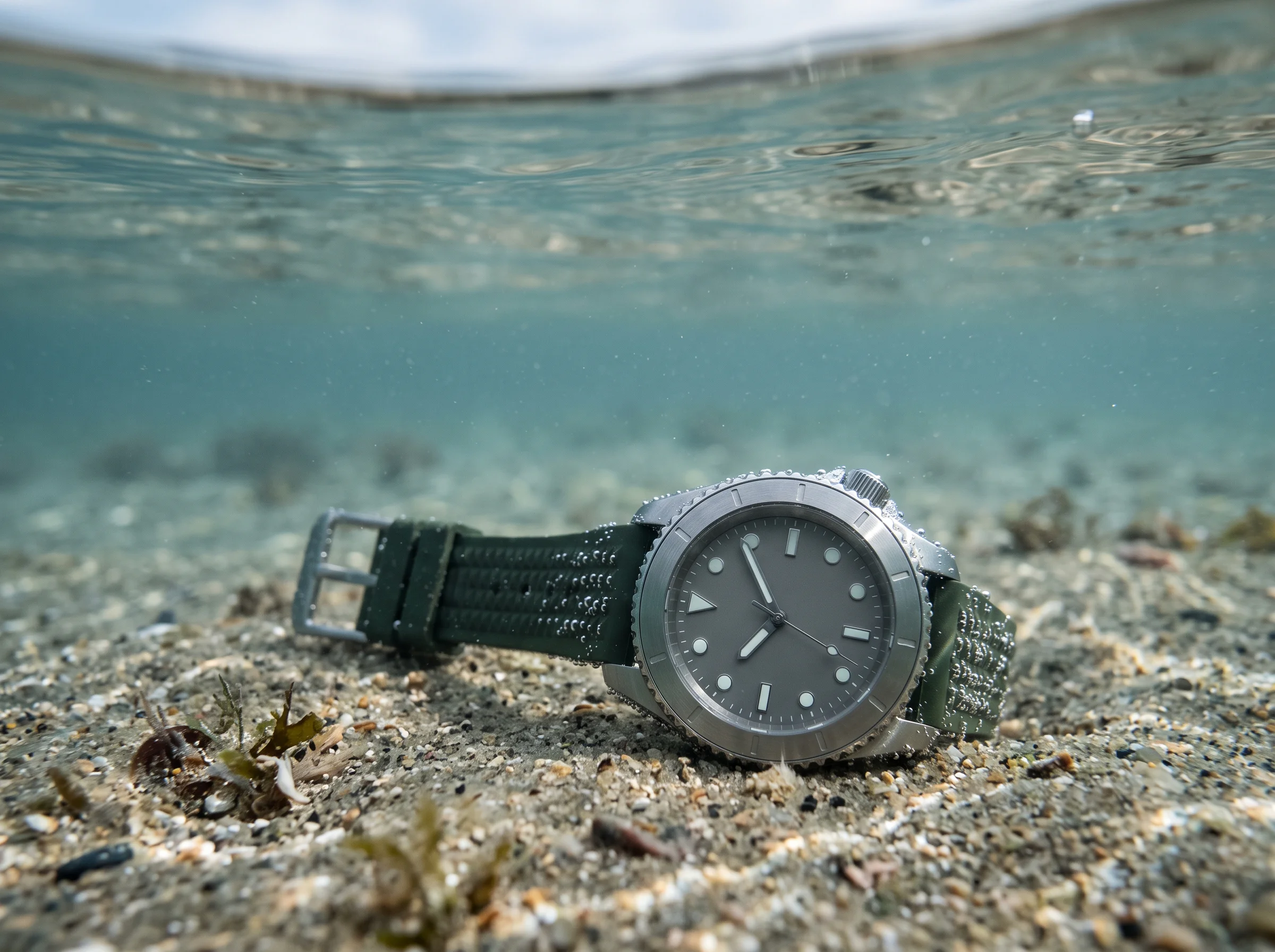 The rating describes still-water pressure in a lab. Real water, and real movement, are a different test entirely.
The word "waterproof" tells you how imprecise the popular understanding is. It has been removed from watchmaking standards entirely, and no manufacturer is allowed to use it. Every watch carries a water resistance rating, which is a specific engineering claim with real limits, measured at the moment the watch left the factory.
Why 30m cannot swim
The gap between the number and reality comes down to static versus dynamic pressure. The test is static, meaning still water. The moment you move, everything changes. A swimming stroke, a wave, or diving hands-first into a pool briefly slams the watch with far more pressure than the same depth of still water would.
That momentary spike is why a 30m watch, tested against the equivalent of 30 meters of calm water, floods the first time you swim laps in a shallow pool. The number is a ceiling measured in ideal conditions, and real life is never ideal.
What each rating actually lets you do
Here is the practical translation, using the rough industry consensus. Treat these as sensible limits, not dares.
| Rating | Also shown as | What it actually handles |
|---|---|---|
| 30m | 3 ATM / 3 bar | Rain, hand washing, splashes. No swimming, no showering. |
| 50m | 5 ATM / 5 bar | Everyday wear and brief, shallow contact. Not for laps or snorkeling. |
| 100m | 10 ATM / 10 bar | Swimming, snorkeling, surfing. Not a dive watch. |
| 200m+ | 20 ATM / 20 bar | Recreational scuba and hard water sports, when ISO 6425 certified. |
| 300m+ | 30 ATM / 30 bar | Serious and professional diving, often with a helium escape valve. |
One unit note: 1 ATM is roughly 1 bar, which is roughly 10 meters, so the three numbers describe the same thing.
The dive watch line is ISO 6425
There is a real difference between a watch that is water resistant to 200m and a certified dive watch. True diver's watches are built and tested to ISO 6425, a far stricter standard that adds a screw-down crown, a unidirectional timing bezel, and testing to 125 percent of the rated pressure, so a 200m diver is pressure-checked to the equivalent of 250 meters. That is why the marking on a genuine tool diver reads "Diver's 200m" rather than just "Water Resistant 200m."
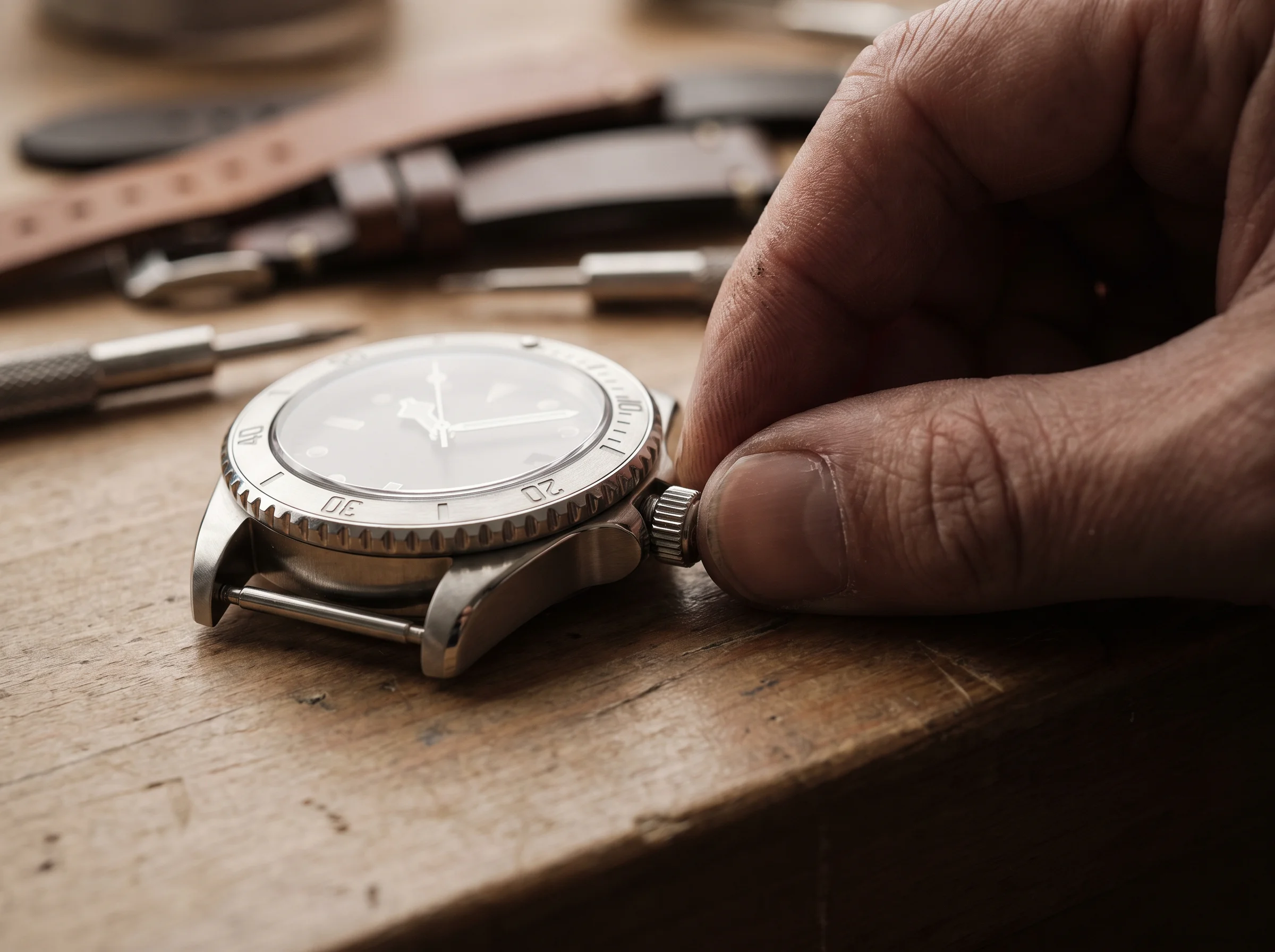 A screw-down crown is part of what makes a true dive watch. Seat it fully before the watch goes anywhere near water.
This is the territory of watches like the Tudor Black Bay and the Omega Seamaster, and the depth rating scales with intent. If you want to see how two real divers compare, our Black Bay 58 versus Seamaster 300 breakdown pits a 200m diver against a 300m one, and the Seamaster Diver 300M guide covers the archetypal do-everything dive watch.
The fine print that ruins watches
The rating describes the watch when it was new, and a watch case is not sealed forever. It relies on rubber or silicone gaskets at the caseback, crystal, and crown, and those gaskets compress, dry out, and degrade over time. A few things accelerate that, and a few habits break water resistance outright.
 Gaskets are consumable. They compress and dry out, which is why an older watch needs a reseal to keep its rating.
Heat is the big one: hot showers, saunas, and steam rooms expand the metal and punish the seals, and steam slips past gaskets that would hold back liquid water. Saltwater and chlorine dry out and corrode seals, chemicals attack them, and an unscrewed screw-down crown removes the seal entirely. Case material matters too, since a softer metal like gold withstands less pressure than steel or titanium, which is one of many trade-offs in our titanium versus steel guide.
Keeping the rating real
Two habits keep a watch performing near its rating. Rinse it with fresh water after any contact with saltwater or a chlorinated pool, which clears the gaskets of the salt and chlorine that degrade them.
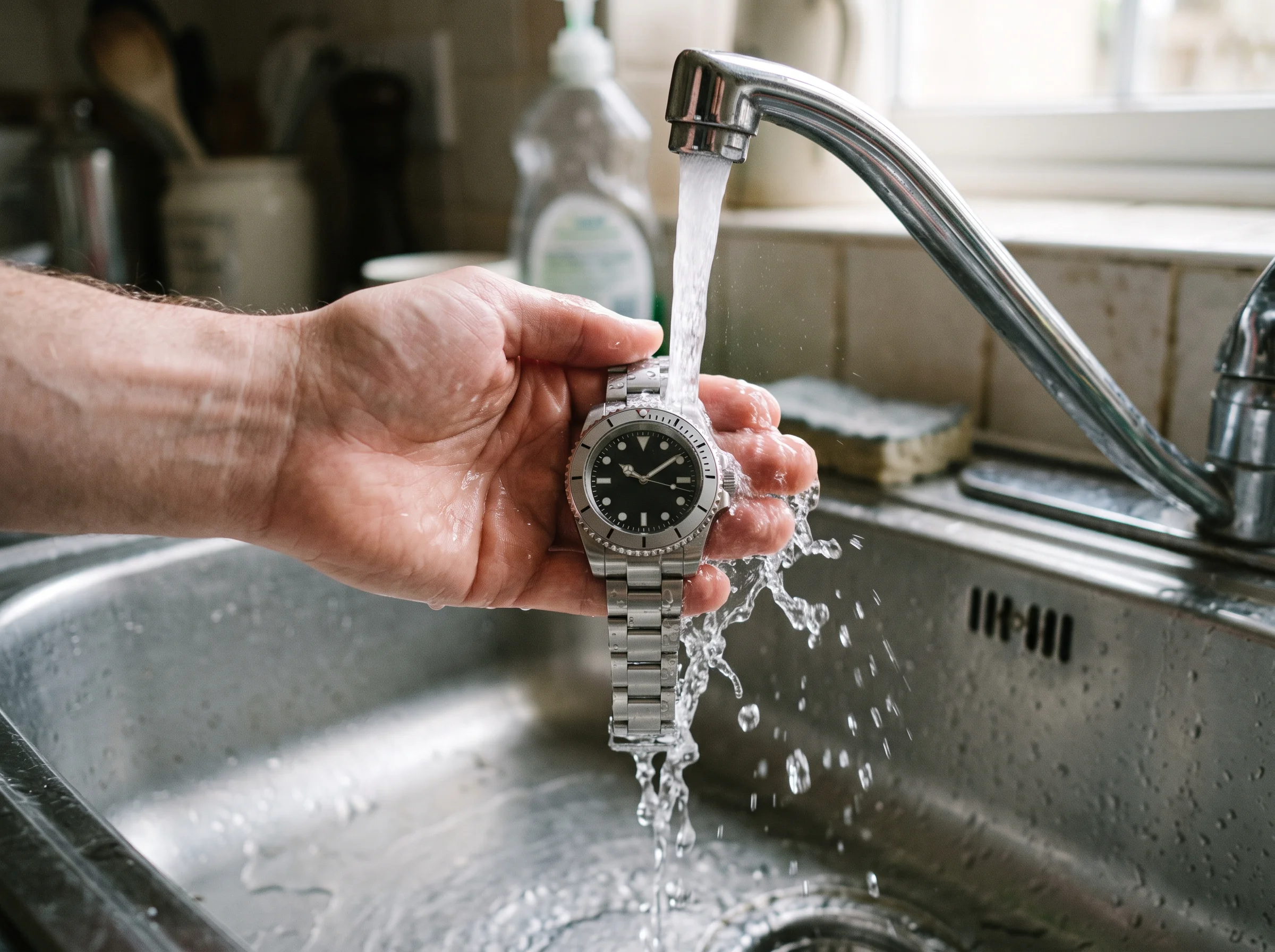 A quick fresh-water rinse after the sea or the pool is the cheapest maintenance there is.
The second is a pressure test. Have the seals checked and the water resistance verified every one to two years, or annually if you swim in the watch often, and replace the gaskets during service. This is a normal part of ownership, and it is worth factoring into the cost of a watch, as we lay out in our guide to what a service actually costs.
The bottom line
Read the number as a ceiling, not a promise, and give yourself margin. Downgrade your expectations one step from what the rating says, keep the crown screwed down, skip the sauna, and rinse after the sea. When you are not sure a watch can handle what you are about to do, the safe answer is to take it off. Watches are repairable, but water damage is expensive and entirely avoidable.
When you want a watch built to actually get wet, browse authenticated pre-owned Breitling at 5dwatches.com.