The moonphase is the least practical complication in watchmaking and one of the most loved. It tells you where the moon is in its cycle, which almost nobody needs to know in 2026, and yet the little golden moon drifting across a night-sky dial is one of the most charming things a watch can do.
Here is how it actually works, why the good ones are more accurate than the cheap ones, and what to know before you buy one.
The short answer: A moonphase shows the lunar cycle through a rotating disc and a shaped window. Most use a 59-tooth gear that drifts about a day every two and a half years. High-end "astronomical" versions use a 135-tooth gear accurate to one day in 122 years. It is a poetic complication, not a practical one, and that is exactly the point.
The images in this article were generated by AI using real reference photography of moonphase watches from Longines, Omega, Blancpain, and IWC to keep the dial and complication detailing accurate. They are illustrations, not photographs of specific inventory.
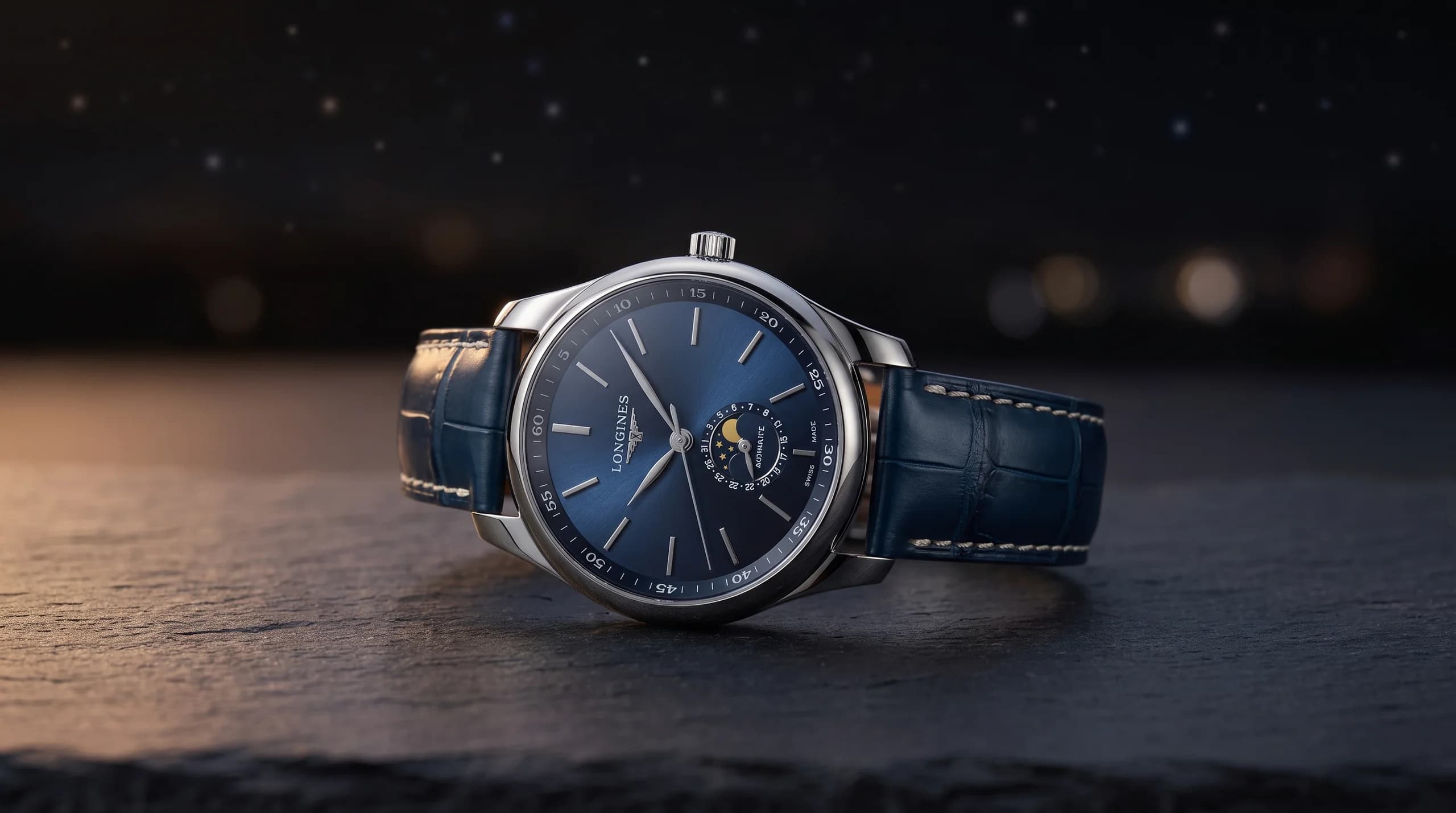
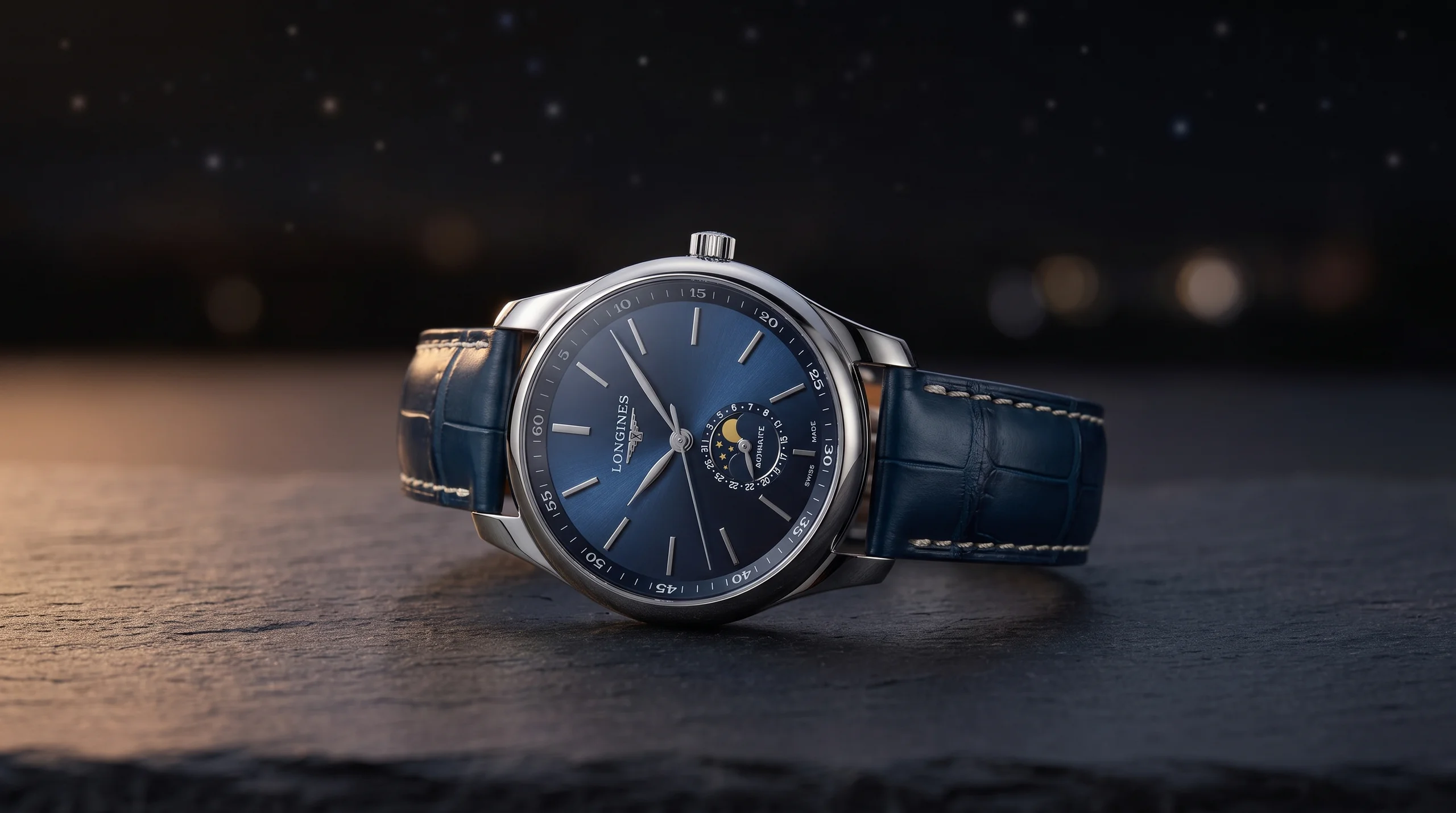 A Longines Master Collection Moonphase, with a golden moon and stars in an aperture at 6 o'clock. The classic layout.
What A Moonphase Actually Shows
A complication is any watch function beyond telling the time, and the moonphase is one of the oldest. It displays the current phase of the moon, waxing from new to full and waning back again, through a small window on the dial.
The point of reference is the synodic month, the time it takes the moon to cycle through all its phases as seen from Earth. That cycle runs 29 days, 12 hours, and about 44 minutes, or roughly 29.53 days. Every moonphase watch is really just an attempt to reproduce that number with gears.
The Display Is A Disc With Two Moons
Behind the dial sits a rotating disc printed or engraved with two identical moons on opposite sides, against a night-sky background. A shaped aperture on the dial reveals part of that disc at a time.
As the disc turns, the curved edges of the window frame the visible moon, mimicking the waxing and waning you would see in the sky. When the full moon sits dead center in the window, it is a full moon. When only a sliver shows at the edge, it is a crescent. Two moons on the disc means each one takes a turn, so one full phase completes roughly every 29.5 days.
The Gear That Makes It Work
This is where the mechanism gets clever, and where the difference between a good moonphase and a great one lives.
The Standard 59-Tooth System
The classic setup uses a single gear with 59 teeth. A small finger advances it one tooth every 24 hours. Two moons across 59 teeth works out to a phase every 29.5 days, which is close to that real 29.53-day lunar month.
Close, but not exact. That tiny 0.03-day gap adds up. A standard moonphase drifts a full day out of step roughly every two years and seven months, as Worn & Wound's breakdown of the complication explains. In practice, a quick correction once a year or so keeps it looking right, and many owners consider that small ritual part of the charm.
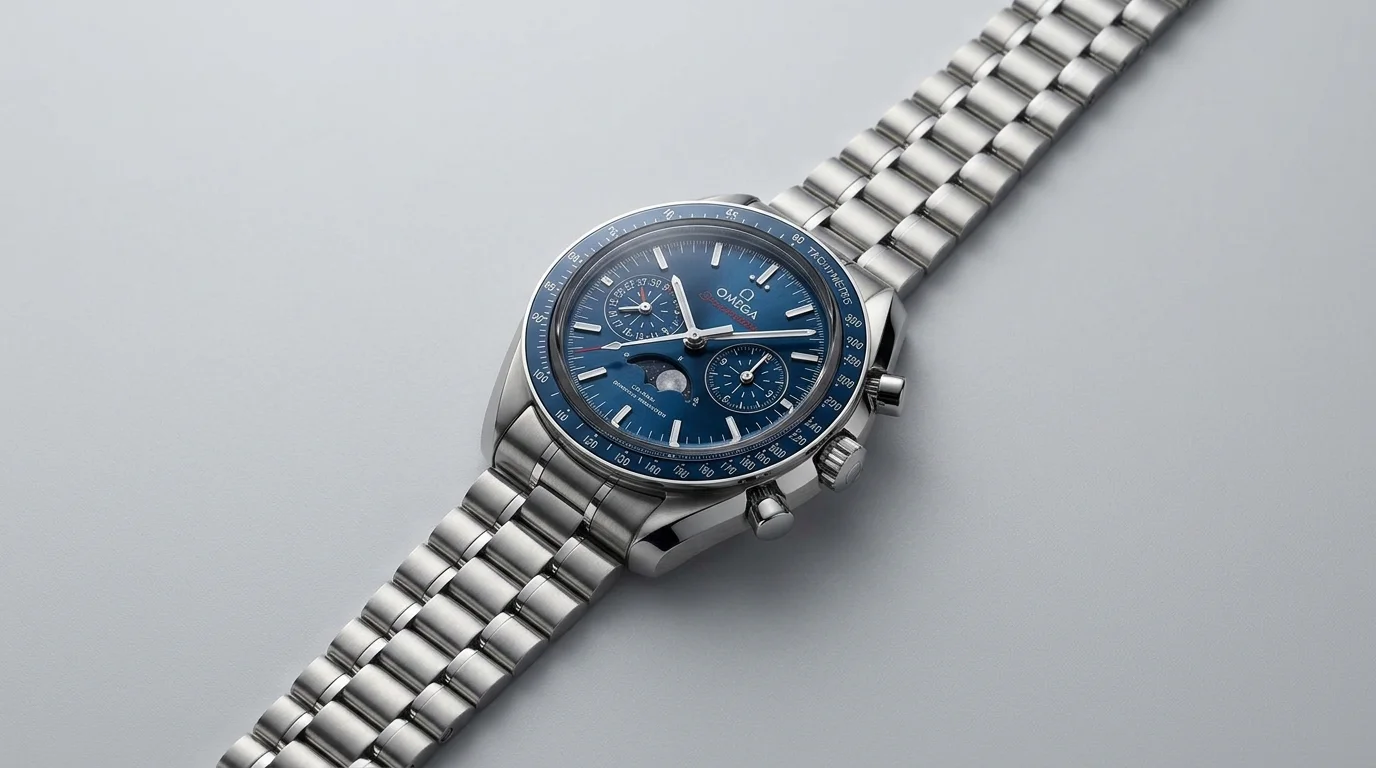 The Omega Speedmaster Moonphase carries the complication on a sports chronograph, with a photorealistic double moon at 6 o'clock.
The Astronomical 135-Tooth System
Watchmakers being watchmakers, a day of drift every few years was not good enough for everyone. The fix is a more complex gear train built around a 135-tooth wheel.
That extra precision drops the error dramatically. A 135-tooth astronomical moonphase stays accurate to within a single day for 122 years before it needs correcting. You would hand the watch down before it ever needed adjusting. A few exotic pieces push even further, staying accurate for over a thousand years, though those are horological showpieces more than anything practical.
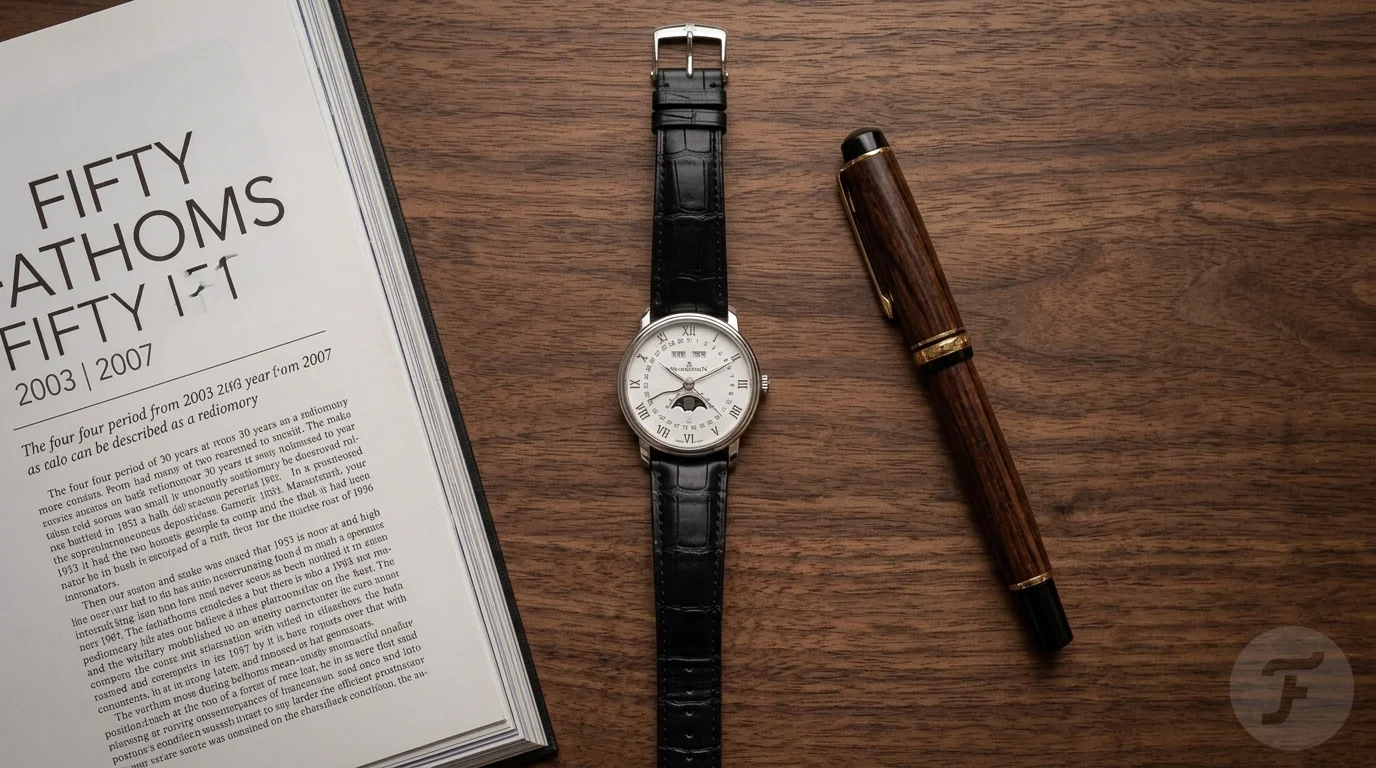 The Blancpain Villeret sits at the traditional high end, with its signature smiling-moon face on a clean white dial.
A Little History
The moonphase is far older than the wristwatch. Clockmakers built lunar displays into grandfather clocks in the 1600s and 1700s, back when moonlight genuinely mattered for planning night travel and farmers timed planting by the lunar cycle.
The complication moved to pocket watches as a mark of sophistication, then made the jump to the wrist in 1925, when Patek Philippe created the first moonphase wristwatch as part of a perpetual calendar. A hundred years later, the same complication that once served navigation survives purely because people find it beautiful.
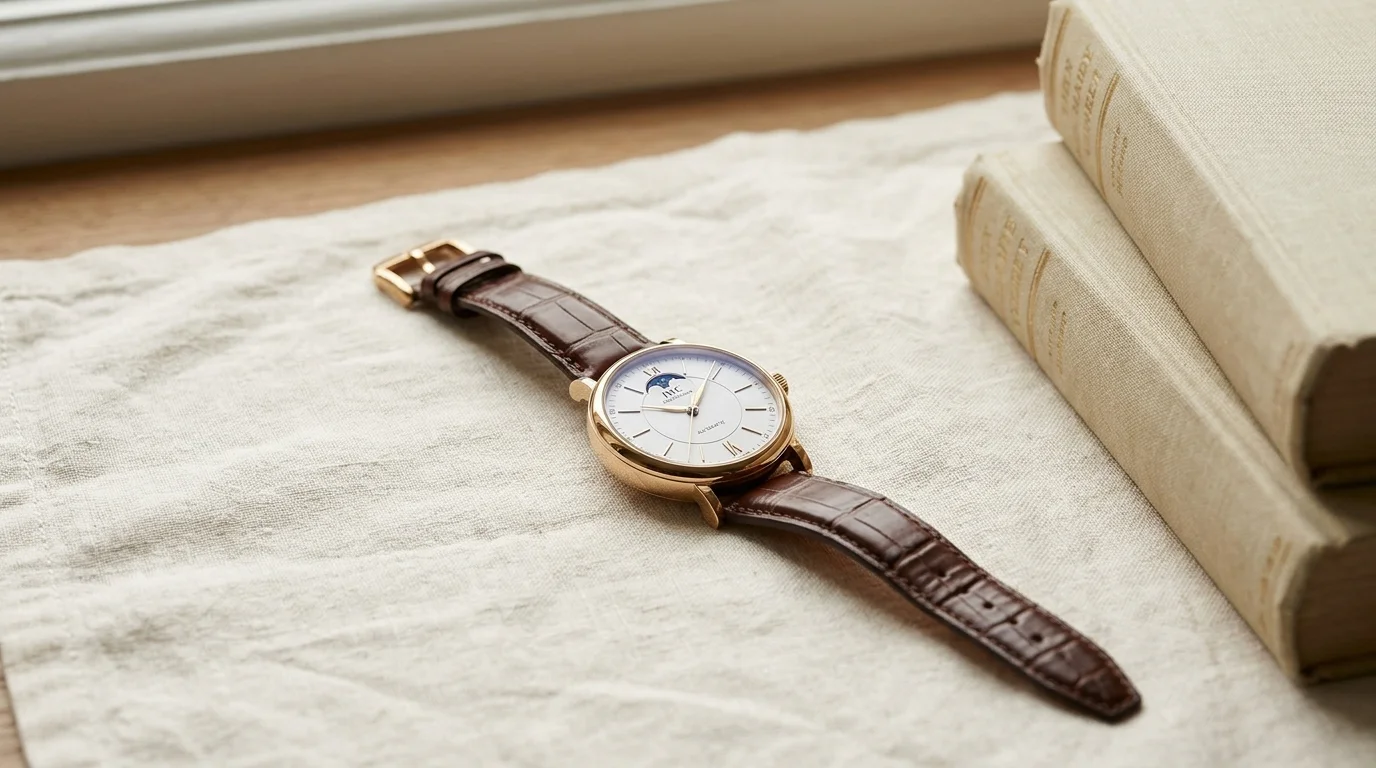 The IWC Portofino places its moon at 12 o'clock, a reminder that the same complication takes many forms across brands.
Buying A Moonphase: What To Know
If the little moon has won you over, a few practical notes will help you buy well.
It Is A Range, Not A Price Point
Moonphase watches span almost the entire market. You can find a genuinely charming automatic moonphase from a reputable Swiss maker for well under $3,000, and the same complication appears on six-figure grand complications. The Longines Master Collection Moonphase shown at the top is a good example of the accessible end, a clean automatic dress watch with the complication done tastefully, and part of why Longines is such strong value in general.
Accuracy Bragging Rights Versus Real Life
Do not overpay for the 135-tooth astronomical version unless you specifically want it. For a watch you actually wear and reset occasionally, the standard 59-tooth moonphase is more than accurate enough, and the yearly correction is trivial. The astronomical version is a connoisseur's flex, part of the same accuracy arms race we covered in how precise a watch really needs to be.
Setting It Correctly Matters
A moonphase needs to be set to the actual current phase to be meaningful, and most are adjusted through the crown or a small case pusher. Advance it until the displayed moon matches tonight's real sky. And like any mechanical watch, it only needs routine service every five to seven years, no special care beyond that.
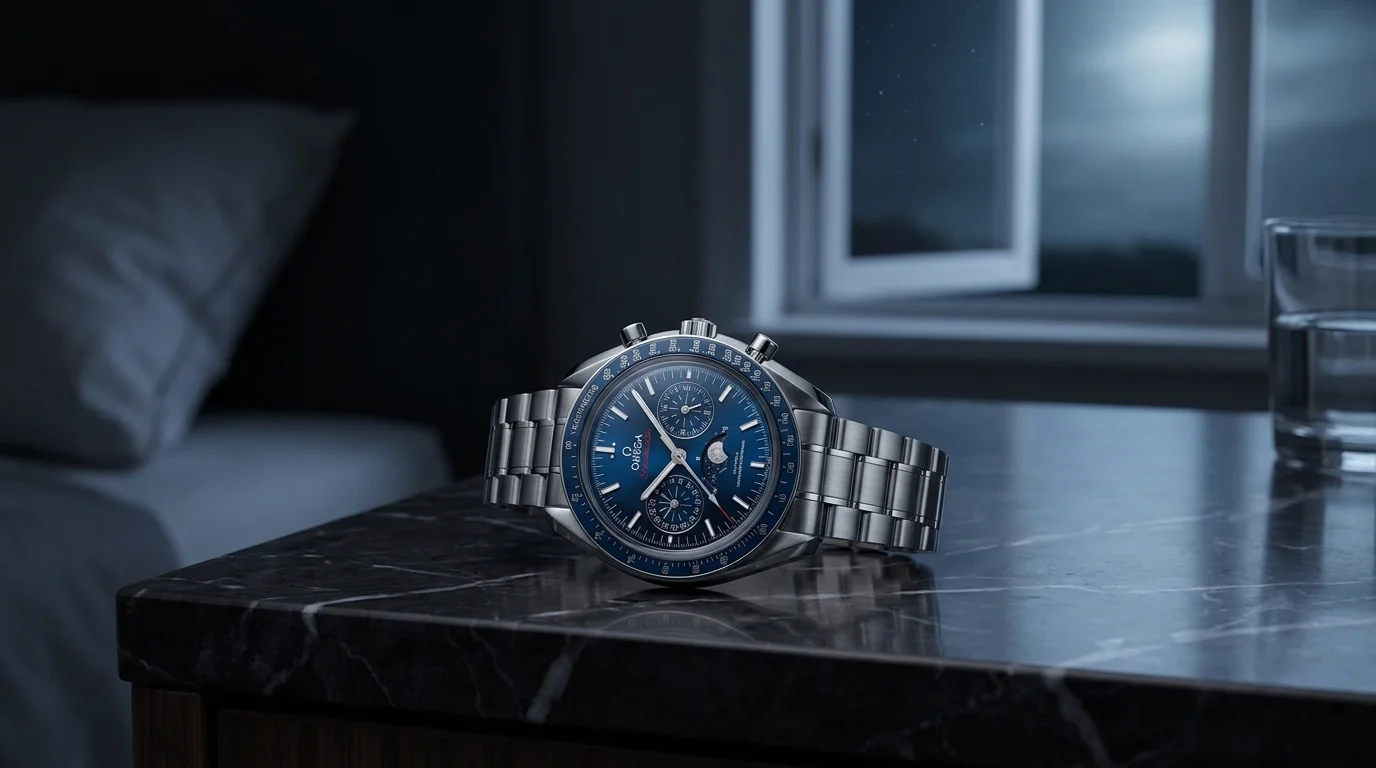 Set it to tonight's sky and it becomes a small, quiet link between your wrist and the actual moon overhead.
The Bottom Line
The moonphase endures because it does something no practical complication can: it connects the watch on your wrist to a cycle that has been running for billions of years. It is not useful, and it does not try to be. It is a small mechanical poem, and once you understand the two-moon disc and the 59 teeth behind it, the charm only deepens.
If a moonphase belongs in your collection, browse Omega models at 5dwatches.com, where the moonphase turns up on some of the most wearable dress and sports watches around.
Frequently Asked Questions
What does a moonphase watch do?
A moonphase shows the current phase of the moon, from new to full and back, through a small shaped window on the dial. Behind that window sits a rotating disc printed with two moons, and its edges frame the visible moon to mimic the real waxing and waning overhead. It is decorative, not practical.
How accurate is a moonphase watch?
It depends on the mechanism. A standard 59-tooth moonphase drifts a full day out of step roughly every two years and seven months, so a small yearly correction keeps it right. A high-end 135-tooth astronomical moonphase stays accurate to within one day for 122 years.
Are moonphase watches worth buying?
If you love the look, yes. It is a poetic complication rather than a useful one, and that is the appeal. It also spans the whole market: a charming automatic moonphase from a reputable Swiss maker starts well under $3,000, while grand complications run into six figures.
Do I need the astronomical 135-tooth version?
Usually not. For a watch you wear and occasionally reset, the standard 59-tooth moonphase is more than accurate enough, and the yearly correction takes seconds. The 135-tooth astronomical version is a connoisseur's detail worth paying for only if that precision specifically appeals to you.
How do you set a moonphase watch?
Most moonphases are adjusted through the crown or a small pusher on the case. Advance the display until the moon in the window matches tonight's actual phase in the sky. Beyond that, it needs only routine service every five to seven years, like any mechanical watch.