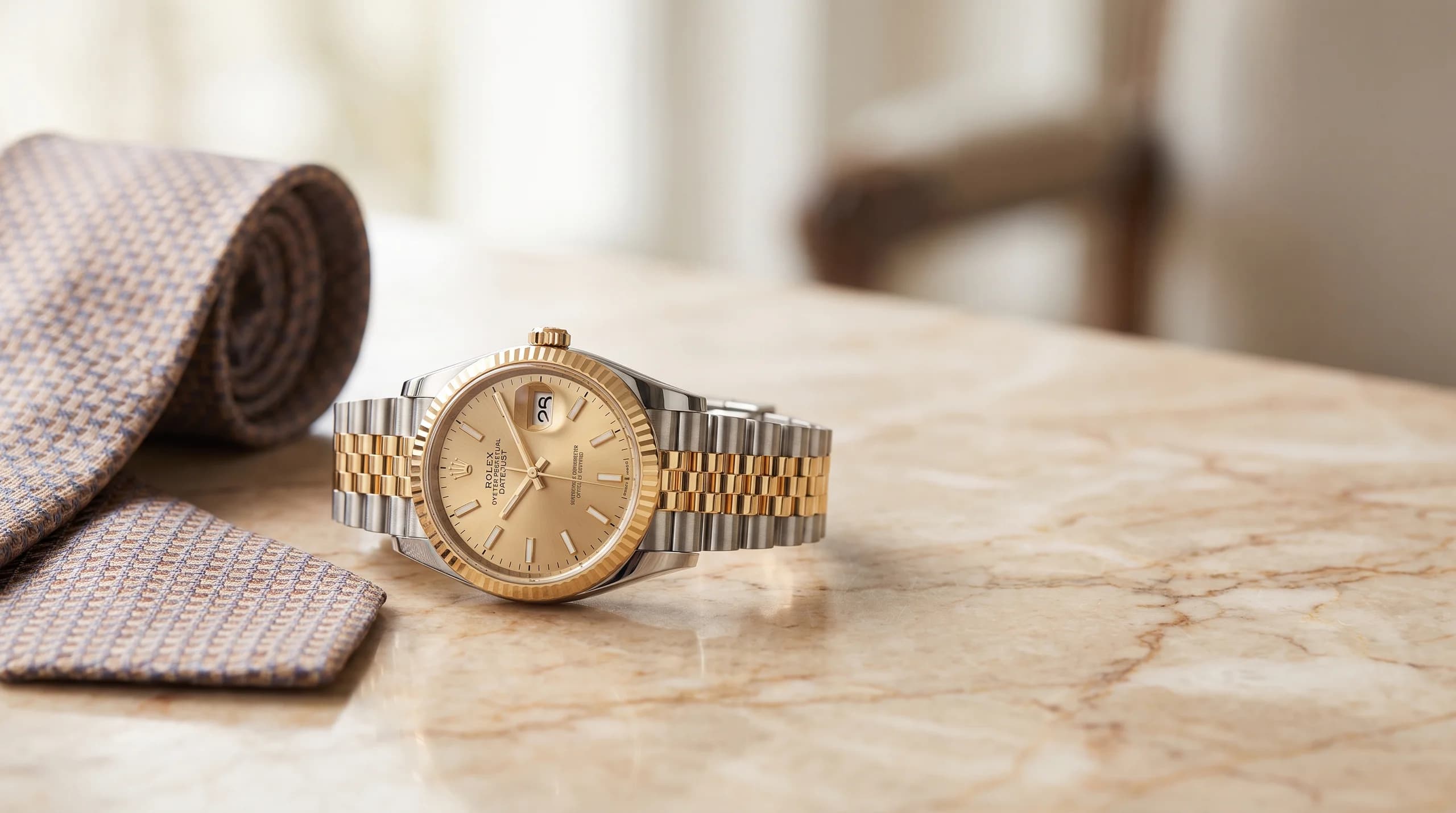
While almost every category of Swiss watch export shrank this spring, one quietly did the opposite. In the May 2026 export figures, gold-steel watches, the two-tone pieces most collectors spent a decade dismissing, were the single strongest-growing segment in the entire industry.
That is a real signal, not a blip, and it says something useful about where the market is heading and where the value is moving. Here is what the data shows and what a buyer should do about it.
The short answer: Two-tone, or Rolesor in Rolex language, was the only bright spot in a flat May export report, up 34% in value while solid gold and steel both fell. It reflects buyers wanting gold's presence without the full gold price. On the pre-owned market, that makes a two-tone Datejust one of the smarter-value ways into a gold-accented Rolex.
The images in this article were generated by AI using real reference photography of the Rolex Datejust to keep the case, bezel, and bracelet detailing accurate. They are illustrations, not photographs of specific inventory.
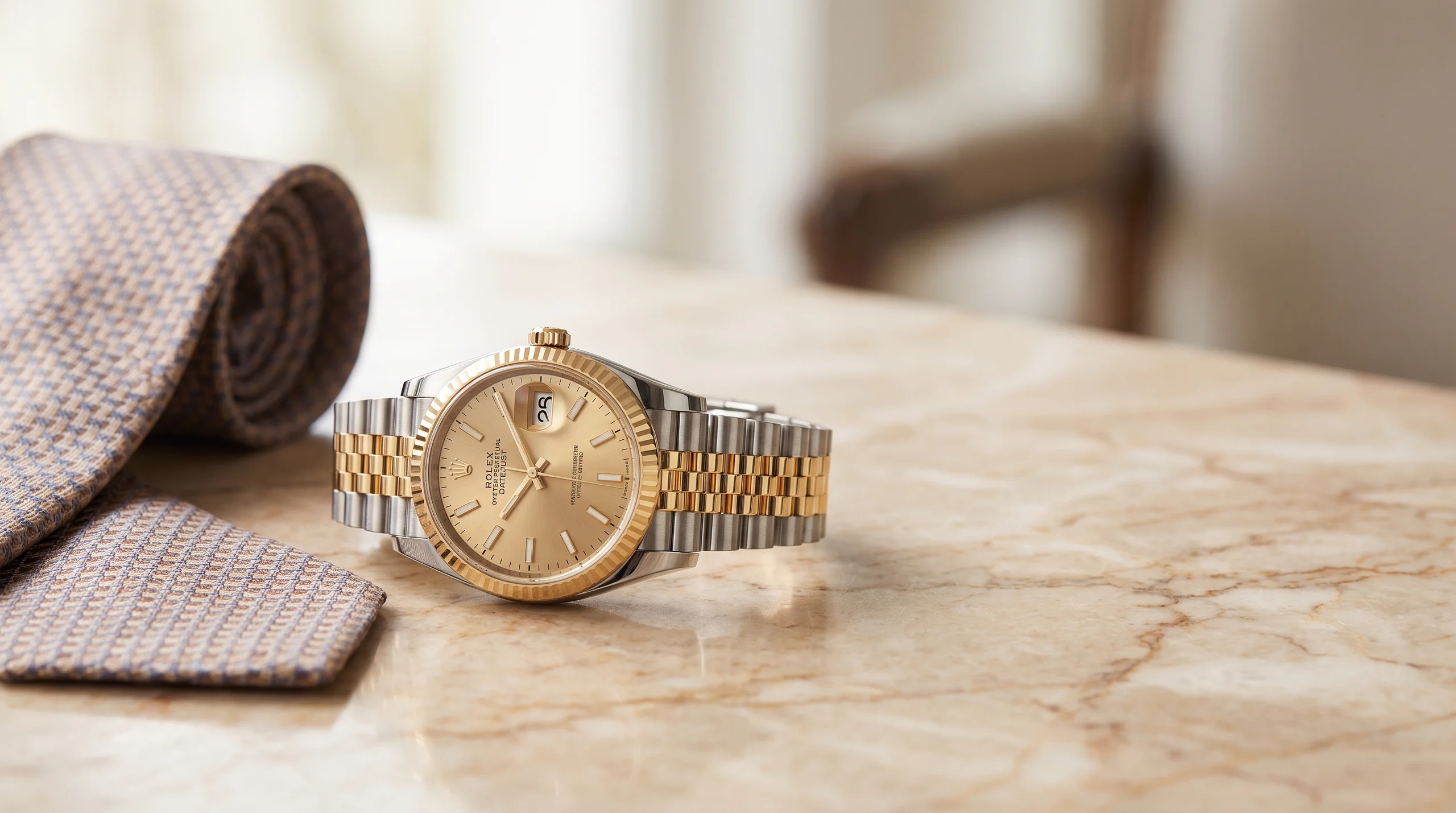 The two-tone Datejust is the watch this export data is really about: gold presence, steel price.
What The May 2026 Data Actually Said
Swiss watch exports were essentially flat in May 2026, rising just 0.4% to CHF 2.1 billion, according to the Federation of the Swiss Watch Industry. Underneath that calm surface, the category performance was anything but even.
Gold-steel watches surged 34% in value to CHF 408 million, roughly $510 million, the strongest growth of any material category. Over the same month, precious-metal watches fell 7.2% and steel watches fell 5.4% in value, with steel volume down 9.6%, as industry reporting on the FH figures laid out.
One Segment Up, Everything Around It Down
Put those numbers side by side and the story is hard to miss.
| Material category | May 2026 change (value) |
|---|---|
| Gold-steel (two-tone) | +34% |
| Precious metal (solid gold, platinum) | -7.2% |
| Steel | -5.4% |
When one category climbs 34% while its neighbors decline, that is not noise. That is a preference shifting in real time.
Why Two-Tone, And Why Now
The simplest explanation is price. Gold hit record highs through 2026, which pushed solid-gold watches to eye-watering numbers and made a full gold watch a harder purchase to justify.
Two-tone threads that needle. A steel case and bracelet with gold on the bezel, crown, and center links gives you the warmth and presence of gold at a fraction of a solid-gold watch's cost. When gold is expensive, the half-gold watch becomes the sensible way to still wear gold.
The Taste Cycle Turned, Too
There is a second force under the price story, and it is about fashion cycles. Two-tone was everywhere in the 1980s, then became deeply unfashionable for two decades, the watch equivalent of shoulder pads. Monochrome noted years ago that two-tone was only beginning to resurface.
That resurfacing is now in full swing. What once read as dated now reads as confident and a little retro, and a generation of buyers with no 1980s baggage simply sees a handsome watch. For the full background on how this works at Rolex specifically, we broke it down in our guide to what Rolesor actually means.
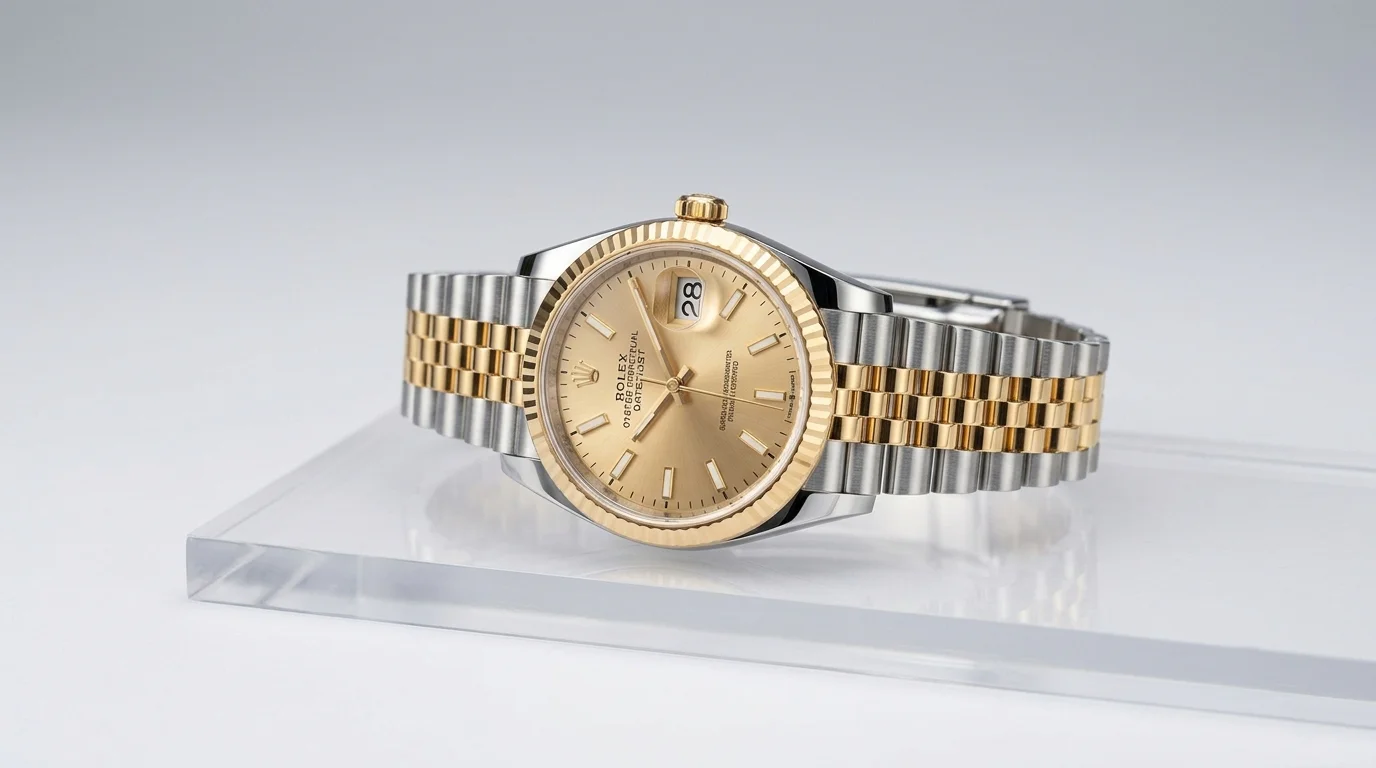 Gold on the bezel, crown, and center links. Steel everywhere else. That mix is exactly what buyers are voting for.
What This Means For A Buyer
Export data measures watches leaving Switzerland, not secondary-market sales, so treat it as a demand signal rather than a price chart. Still, the direction matters for anyone buying.
Rising demand for a category tends to firm up its pre-owned pricing over time. Two-tone spent years as the stuff that sat in cases and sold at a discount, which means there is still real value on the secondary market before broader demand fully catches up.
The Two-Tone Datejust Is The Obvious Play
If you want to act on this, the two-tone Datejust is the cleanest expression of the trend. It is the watch that defined Rolesor, it comes in yellow, Everose, and white gold pairings, and the 36mm size wears on almost any wrist.
Buying one pre-owned lets you skip retail and the depreciation new buyers absorb, while owning exactly the category the market is now moving toward. And if you have been eyeing gold but balking at the price, the same logic that drove that 34% applies to you: two-tone is how you wear gold without paying for a solid-gold case. It is the same instinct behind watching the gold-versus-platinum price gap before buying any precious-metal piece.
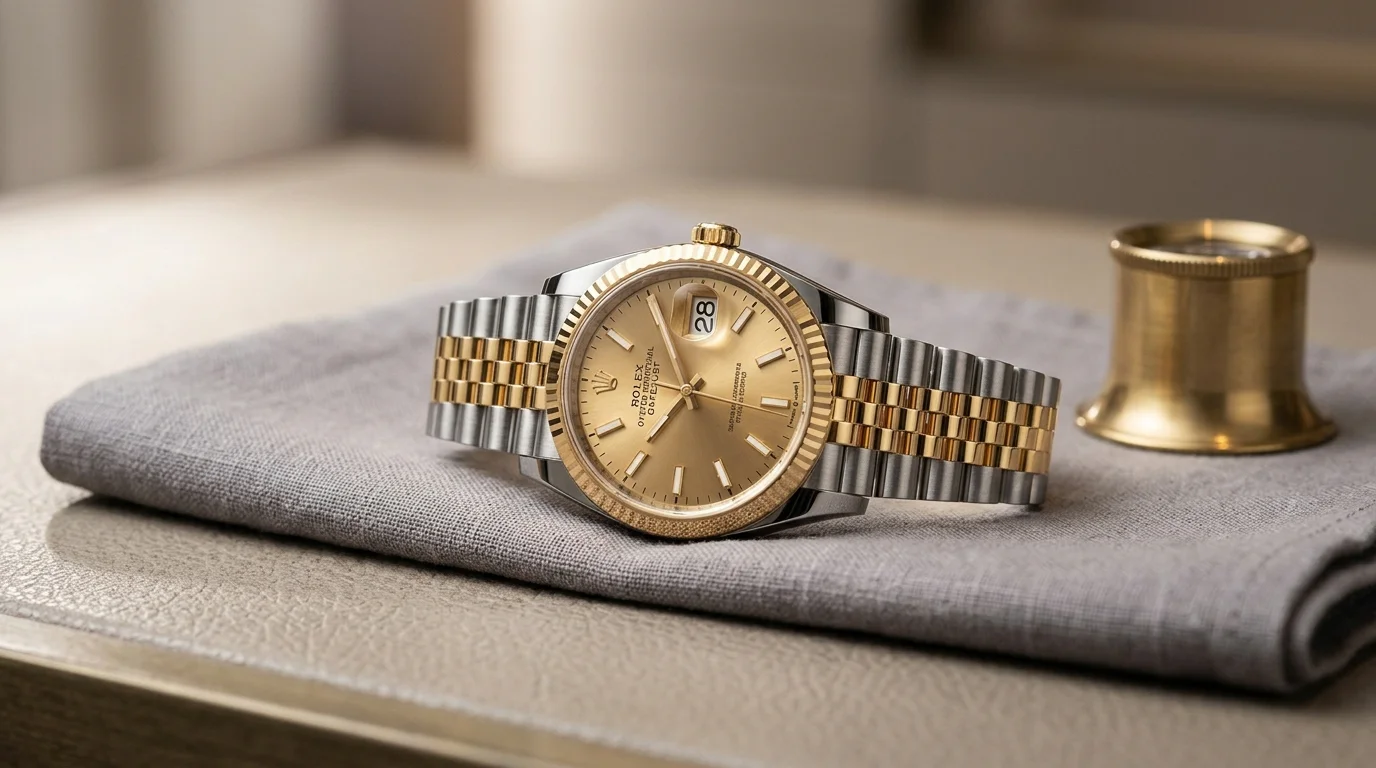 Two-tone sat at a discount for years. Rising demand is the reason to look now, before the market fully catches up.
The Bottom Line
The May 2026 export figures did something rare: they handed collectors a clear, sourced signal in a market that usually only makes sense in hindsight. Gold-steel is the one growing segment, up 34% while everything around it fell, and the reasons behind it, expensive gold and a turned taste cycle, are not going away soon.
You do not have to chase the trend at retail to benefit from it. Pre-owned two-tone still carries the value the category earned during its unfashionable years. Have a look at two-tone Datejust options at 5dwatches.com and decide for yourself whether the smart-money read is worth acting on.
Frequently Asked Questions
Why are two-tone watches growing in 2026?
Two reasons. Gold hit record highs, so a two-tone watch became the affordable way to still wear gold, and the taste cycle that made two-tone unfashionable for two decades has turned back in its favor. Together they drove a 34% jump in gold-steel exports in May 2026 while other segments fell.
What does Rolesor mean?
Rolesor is Rolex's trademarked term for its two-tone construction, combining stainless steel with 18-karat gold on the same watch. It comes in yellow, Everose (rose), and white gold pairings. The Datejust is the reference that defined it.
Is a two-tone Datejust a good buy right now?
For value, yes. Two-tone spent years selling at a discount, so the pre-owned market still holds real value before rising demand catches up. A two-tone Datejust gives you gold presence at a fraction of a solid-gold watch's cost, in a 36mm size that fits nearly any wrist.
Did two-tone really grow while other watch segments fell?
Yes, and the split was stark. In May 2026, gold-steel watches rose 34% in value while precious-metal watches fell 7.2% and steel fell 5.4%, against an overall market that was essentially flat. It was the single strongest-growing material category that month.