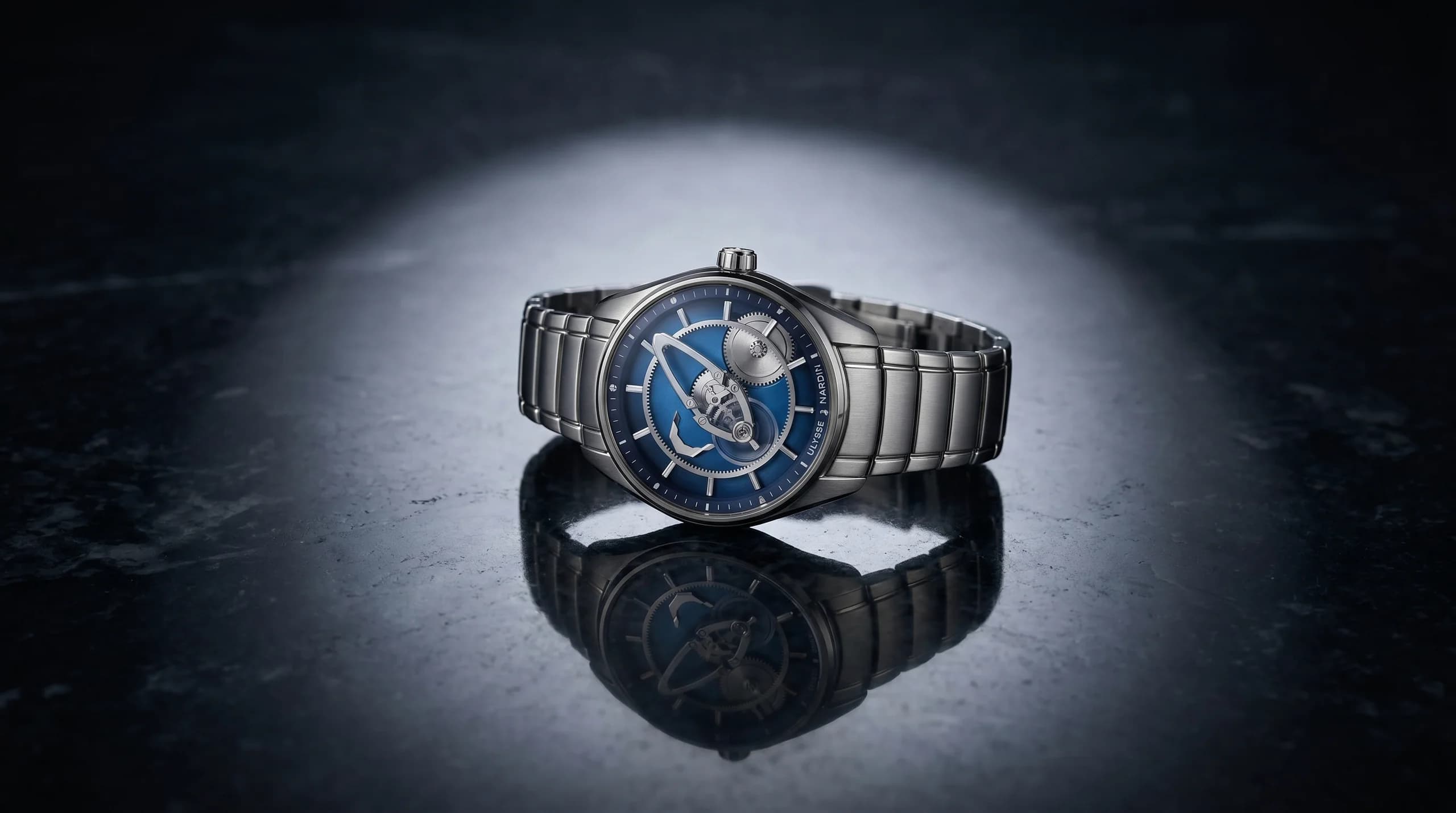
The Ulysse Nardin Freak has no crown. It has no hands. It has no dial. When it landed in 2001, that was close to heresy, a watch that threw out the parts everyone assumed a watch had to have. Twenty-five years later, the silicon it pioneered is sitting inside your Rolex, your Omega, and your Patek. The Freak did not just break the rules. It wrote the ones the industry now follows.
The images in this post are AI-generated illustrations for editorial purposes and may not exactly represent the actual watch, its dial, or its finishing.
The short answer
The Freak, created by watchmaker Ludwig Oechslin under reviving CEO Rolf Schnyder, was the first production watch to use silicon components, and it told time in a way nothing else did: the movement itself rotates to display the hours and minutes, with no hands and no dial. You set it by turning the bezel and wound it through the caseback, with no crown at all. In 2026, for the model's 25th anniversary and Ulysse Nardin's 180th, the brand released two anniversary pieces: the wildly complicated [Super] Freak at CHF 320,000 and a more wearable new Freak X from around $41,000. Ulysse Nardin still flies under the radar of buyers chasing safe, flippable steel. That is the market's blind spot, not the watch's.
The watch that broke every rule
In 2001, Ulysse Nardin was a brand known for marine chronometers and astronomical complications, not avant-garde design. Then Oechslin and Schnyder presented the Freak, and the watch world had to recalibrate what was possible. There was no dial to read, no hands to follow, and no crown to pull. The entire baguette-shaped movement pivots around the center of the watch once an hour, so the movement is the minute indicator, while a disc underneath carries the hours.
Setting the time meant rotating the bezel. Winding meant turning the caseback. It sounds like a gimmick until you handle one, at which point it reads as a completely coherent rethink of how a mechanical watch can work. Few watches in the last fifty years have been this genuinely original.
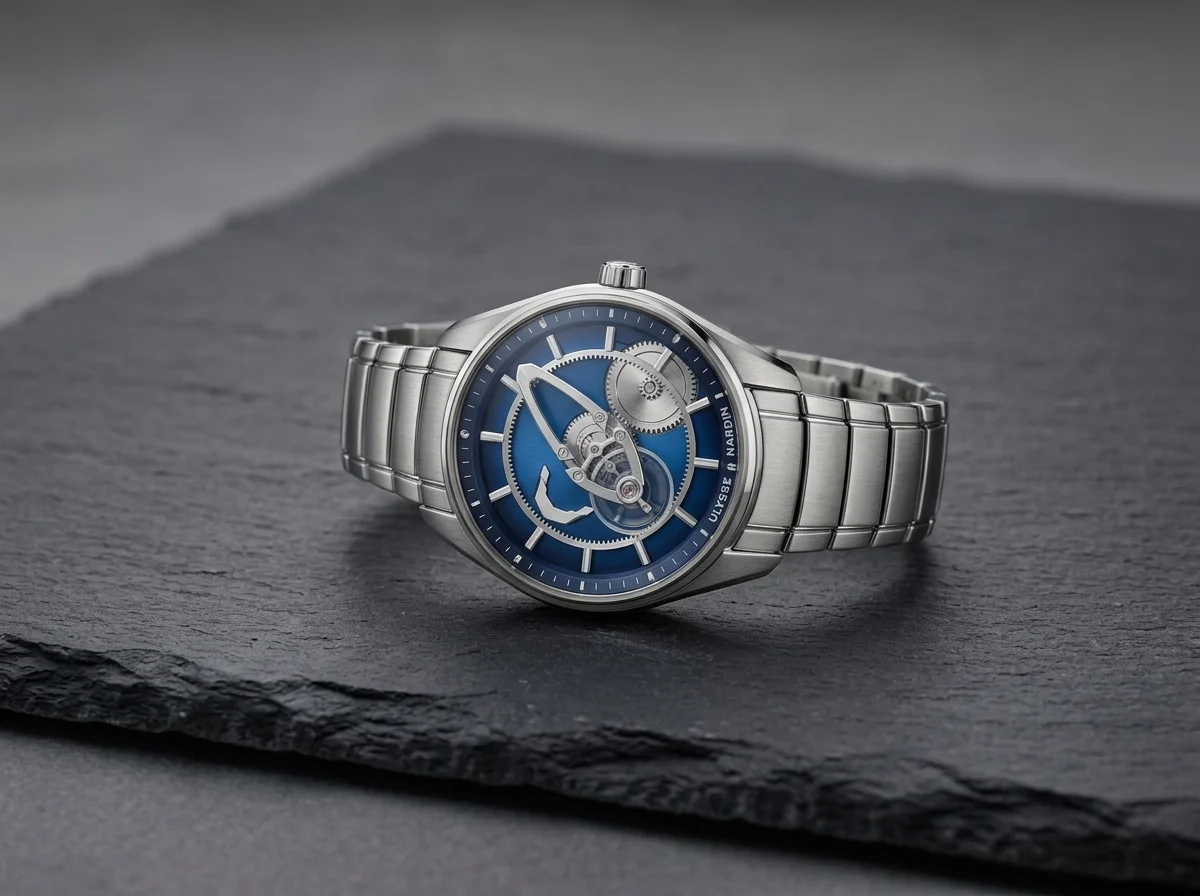 No dial, no hands, no crown: the rotating movement itself tells the time. (AI-generated illustration.)
The innovation everyone else copied
The Freak's lasting contribution is not its looks. It is silicon. The 2001 Freak was the first time a major brand put a silicon component into a production watch, and Ulysse Nardin went on to co-found a dedicated silicon laboratory, SIGATEC, to make them. In 2007 it added DIAMonSIL, a diamond-coated silicon that runs harder and with less friction.
Look at the industry now. Silicon hairsprings and escapement parts are everywhere, from Patek Philippe's Silinvar to Omega's anti-magnetic movements to Rolex's Syloxi hairspring. The material that lets modern watches shrug off magnetism and hold their rate started as a Freak experiment. Most of the brands now relying on it are far more famous than the one that proved it could be done.
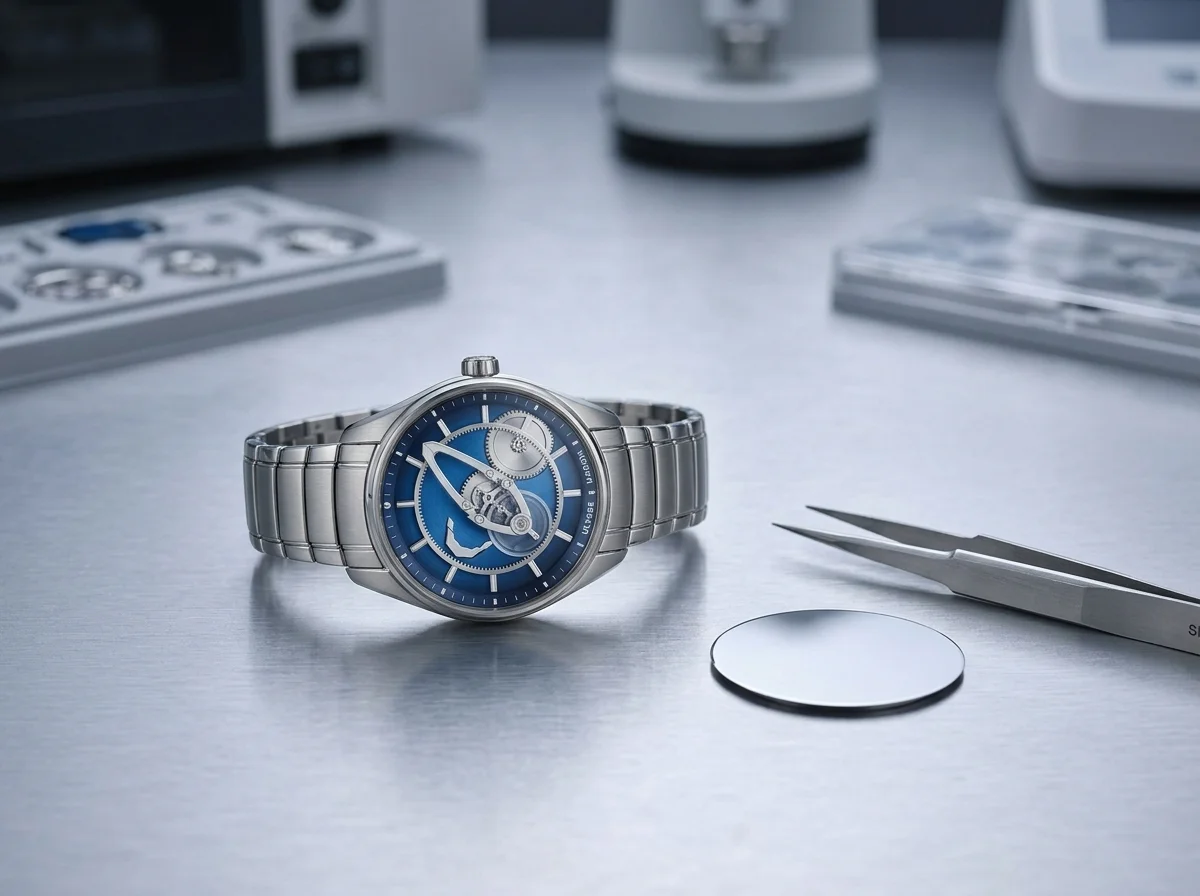 The Freak was the first production watch with silicon parts. The whole industry followed. (AI-generated illustration.)
Twenty-five years on, the anniversary doubled down
Ulysse Nardin marked the milestone in the most Ulysse Nardin way available, by building something that had not existed before. The [Super] Freak, limited to 50 pieces in a 44mm white-gold case, is what the brand calls the most complicated time-only watch ever made. Its caliber UN-252 took four years to develop, runs 511 components, and drives two inclined flying tourbillons on a rotating carousel, plus the first seconds display in Freak history. Revolution, covering it from Watches and Wonders, summed it up as a technical tour de force that somehow still lives up to its own hype. The price is CHF 320,000.
At the other end sits the watch most people will actually wear. The reengineered Freak X drops to a 41mm monobloc case, gains an in-house micro-rotor caliber, a DIAMonSIL escapement, and 100m of water resistance, and starts around $41,000 in steel. It keeps a crown for everyday ease, a concession the purist original refused. Between the two, the collection covers both extremes of what the Freak idea can be.
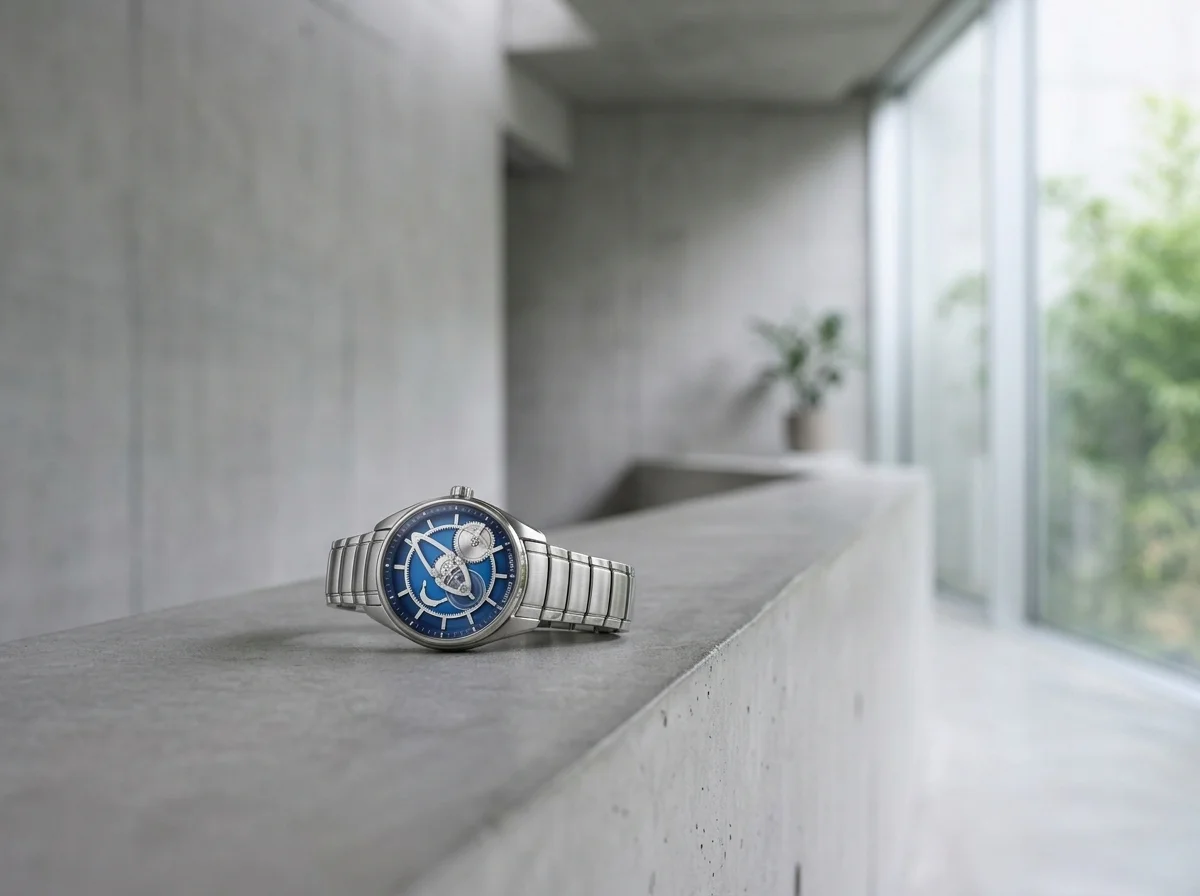 The 2026 Freak X: smaller, more wearable, still unmistakable. (AI-generated illustration.)
A working dealer's read
Here is the honest part. The Freak will never be a flip. It does not have a waitlist you can arbitrage or a secondary premium you can ride, and Ulysse Nardin does not command the name recognition that turns a steel sports watch into a trading chip. As Watchonista put it, the brand tends to fly under the radar of buyers filling collections with safe pieces they can sell on a whim.
That is precisely the point. The Freak is the antithesis of the flip. You buy one because it is among the most original objects in modern watchmaking, not because a spreadsheet says it will appreciate. The same instinct rewards the collector who looks past the badge toward the engineering, the one who notices that Vacheron's 70-day Twin Beat is solving a real problem, or that Zenith's undervalued El Primero carries more pedigree than its price. In a market fixated on a handful of names, the Freak is a reminder of where actual invention has been hiding for twenty-five years.
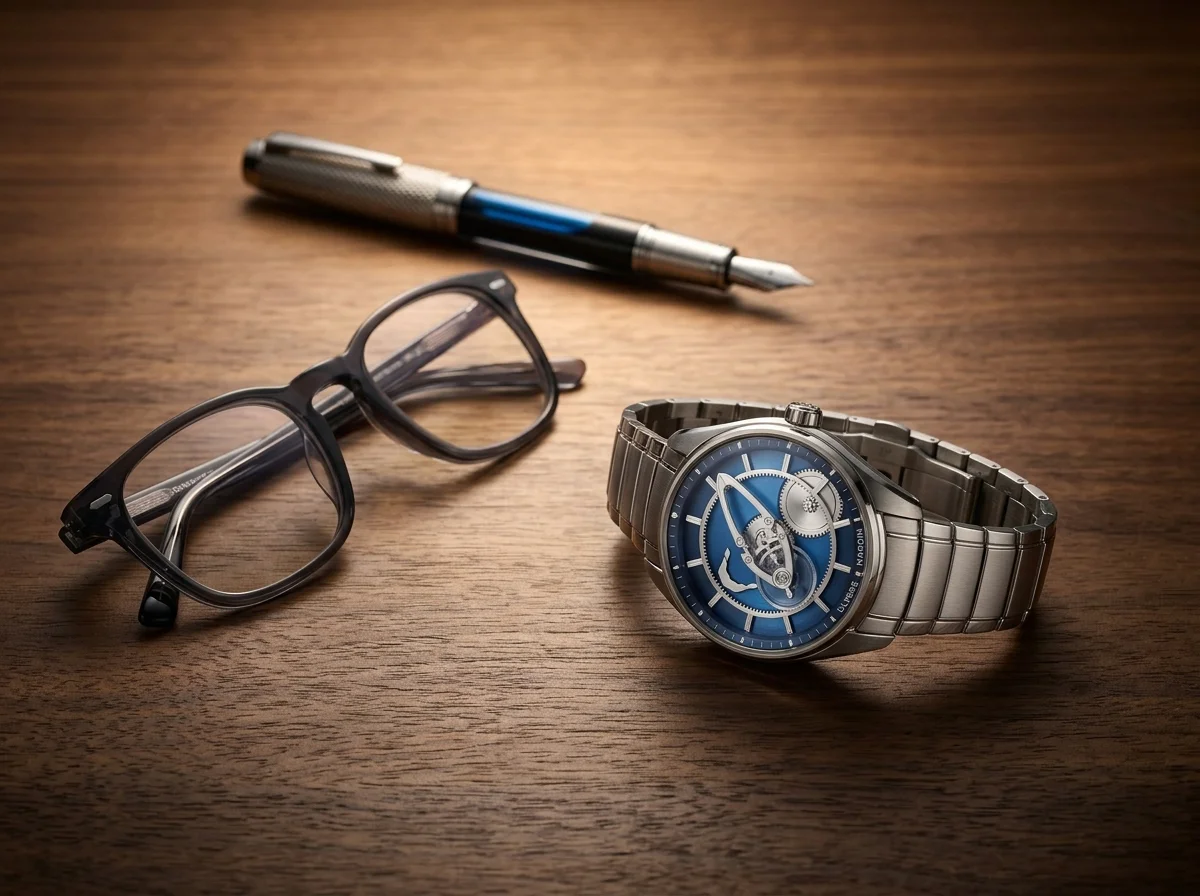 Bought for what it is, not for what it might resell for. (AI-generated illustration.)