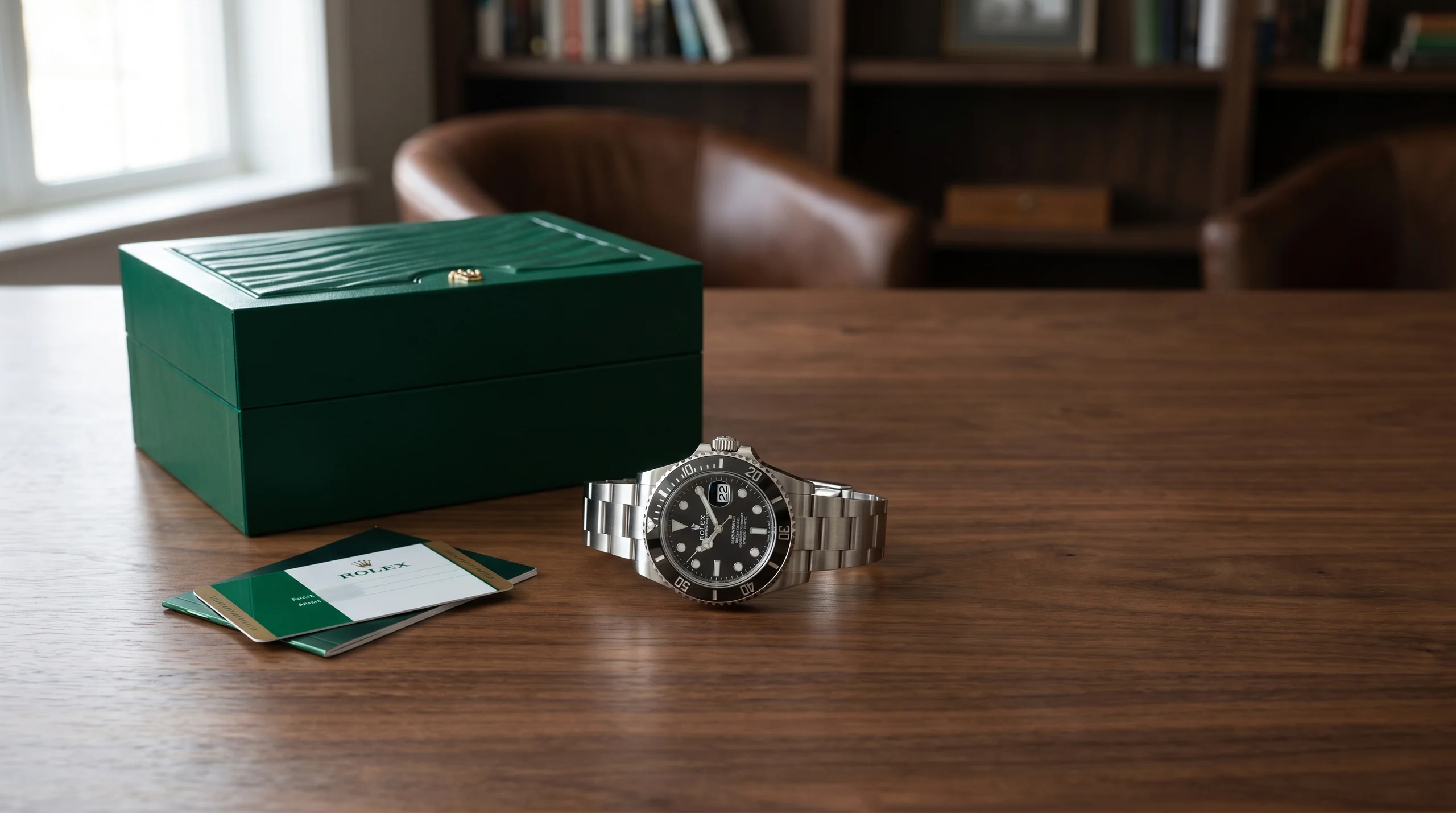
The short answer
"Full set" means the watch plus its original box, warranty card or certificate, and booklets. "Naked" means the watch alone. The market pays more for the full set, and the gap is bigger than most first-time buyers expect.
Across the secondary market, a complete set typically adds 13% to 25% to resale value, and full sets sell about 13% faster than watch-only listings. On hot Rolex sports references the premium runs higher. The catch: that premium is mostly about confidence, not cardboard, and it does not work the same way on every watch.
Box and papers are a watch's birth certificate. They do not authenticate it on their own, but they make a buyer comfortable paying full price.
All images in this post are AI-generated and may not perfectly represent the actual watch references discussed. They are intended for illustration only.
What a "full set" actually includes
The term gets used loosely, so here is what a complete modern set means.
- The watch, on its original bracelet or strap, ideally with any extra links.
- The original box, the branded outer and inner presentation case.
- The warranty card or certificate, showing the reference, serial, and the dealer's date stamp. This is the single most important document.
- Booklets, tags, and any accessories the watch shipped with.
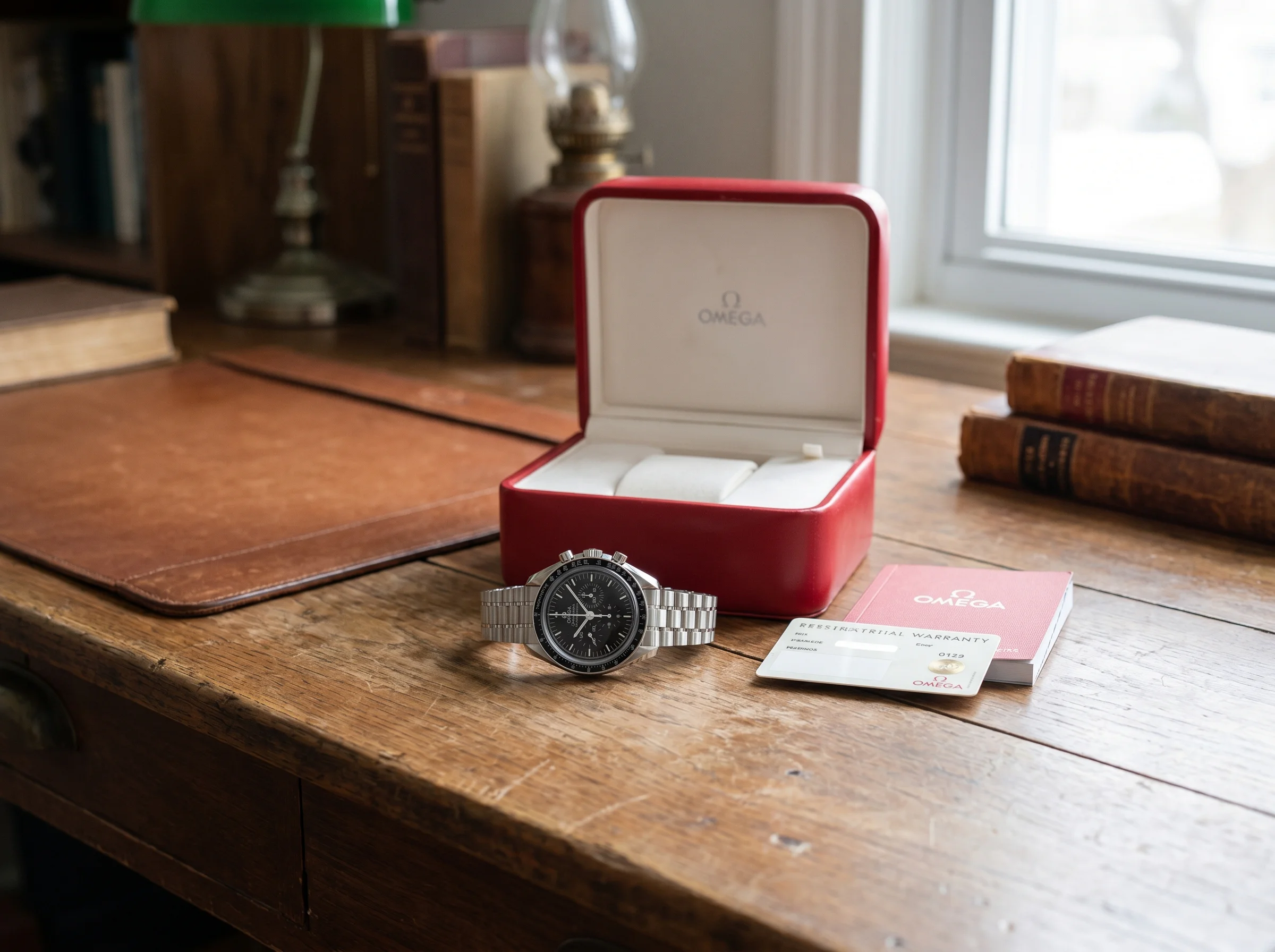 A complete Omega Speedmaster set: watch, red Omega box, warranty card, and booklet. The card carries the reference, serial, and purchase date, and it is the document buyers care about most.
The card does the heavy lifting. The box matters for presentation and completeness, but it is the dated, stamped paperwork that ties the specific watch to a specific authorized sale.
What the premium actually is
The number is real and it is measurable. The Watch Exchange London puts the full-set premium at 13 to 25% depending on brand, model, and the condition of the documents themselves. For the hottest Rolex, AP, and Patek sports models, some dealers see 20 to 40%, with a documented GMT-Master II example trading around 23% over watch-only.
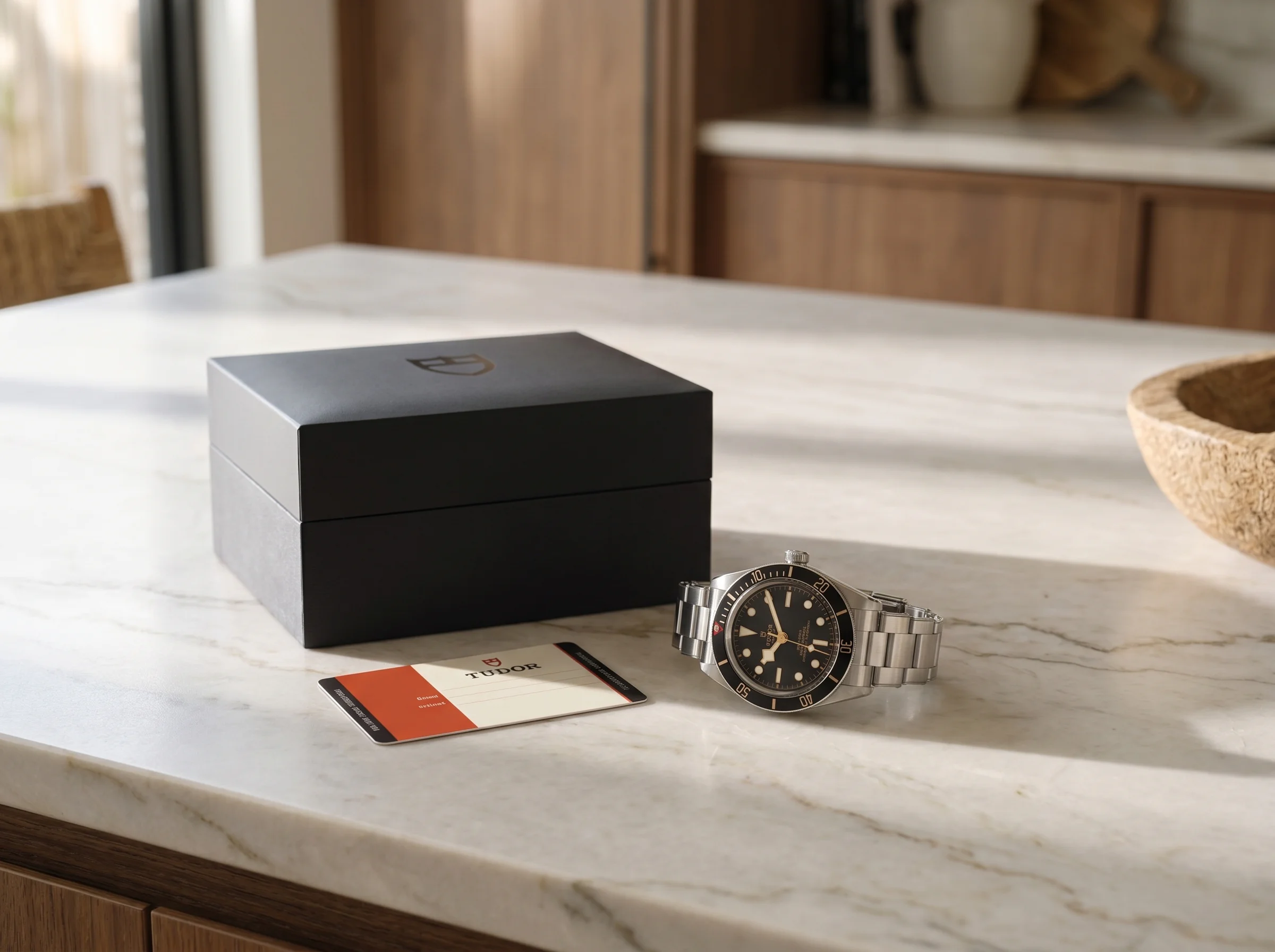 Even at the more attainable end, like this Tudor Black Bay Fifty-Eight, a complete set widens the buyer pool and lifts the price.
But understand what you are paying for. The premium is not the resale value of a cardboard box. It is the price of certainty.
| What the buyer gets | Why it commands a premium |
|---|---|
| Authentication support | A second layer of proof alongside the watch |
| Provenance | A dated, stamped link to the original sale |
| Faster, easier resale | Full sets close roughly 13% quicker |
| Collector completeness | The set "feels right" and signals care |
A dealer can offer more for a full set because verification is faster and the watch sells to a wider pool. That efficiency flows back to you as a higher price.
Where it does not work the same way
Here is the nuance that saves you money, in both directions.
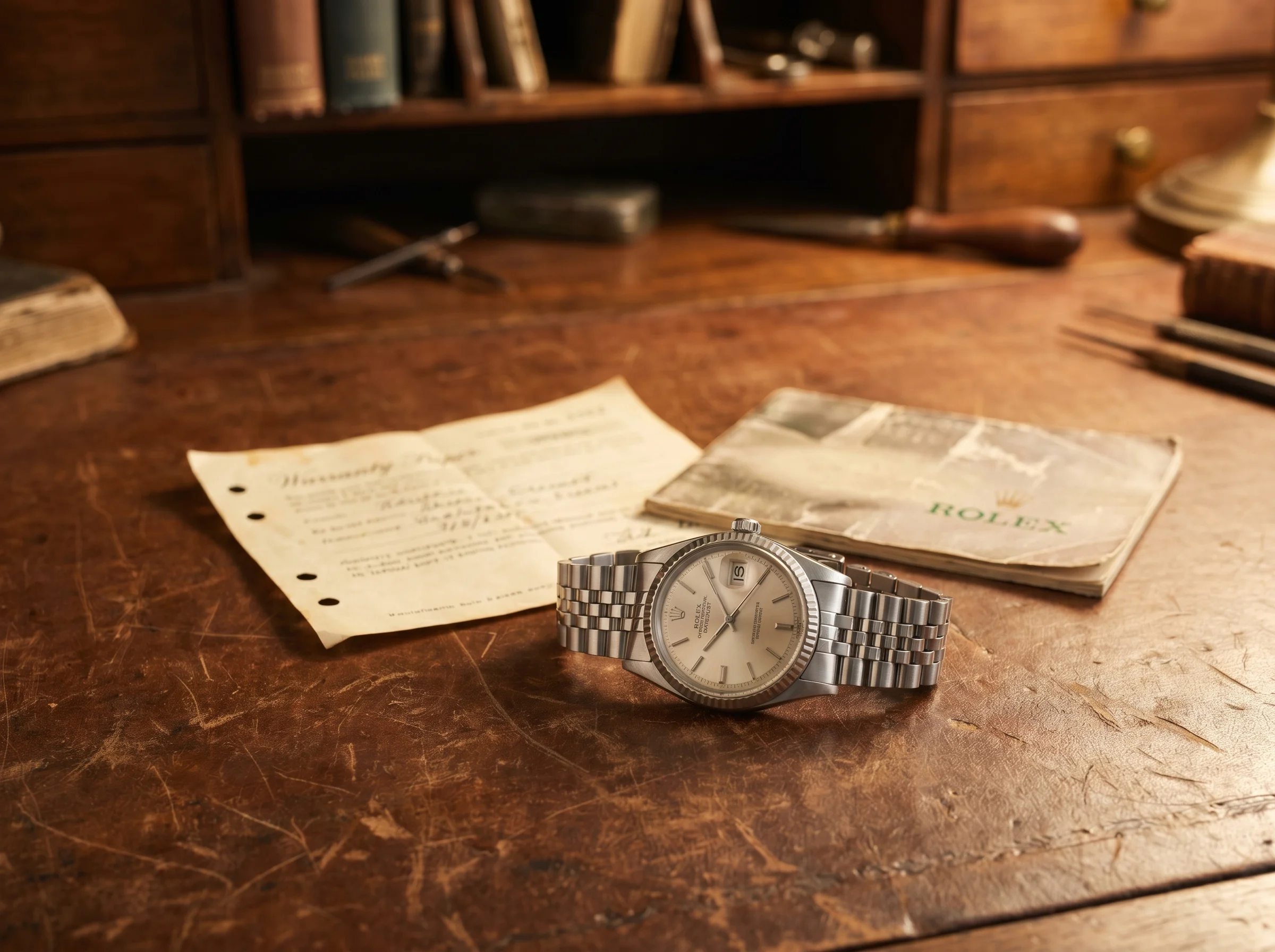 On a vintage piece like this Datejust, surviving original papers are rare and can add a steep premium, but their absence is far more forgiven than on a modern watch.
Vintage flips the logic. Original papers from the 1960s or 1970s are genuinely scarce, so when they survive they can add a premium well above the standard range. At the same time, the market forgives missing papers on a 50-year-old watch, because everyone knows documentation that old is hard to keep. On vintage, condition and originality of the watch itself matter more than the paperwork.
Papers are not authentication. Cards and boxes can be faked, and a fake full set is a known trick to dress up a problem watch. Documentation supports authentication; it never replaces it. The watch has to be verified on its own merits first.
A service paper is not original papers. A receipt from a recent overhaul is useful, but it is not the original dated warranty card, and it should not be priced like one.
How to use this when you buy
- Decide if you are a keeper or a trader. If you will own it for life, a naked watch at a real discount can be the smarter buy. If you may resell, the full set protects your exit.
- Prioritize the card over the box. A watch with its original stamped card and no box beats a watch with a box and no card.
- Never let papers stand in for authentication. Verify the watch first. Our authentication checklist walks through how.
- Price the gap honestly. A naked watch should cost meaningfully less. If a "naked" piece is priced like a full set, walk.
The dealer take
Box and papers are worth paying for, within reason, because they make your watch easier to insure, easier to trust, and easier to sell.
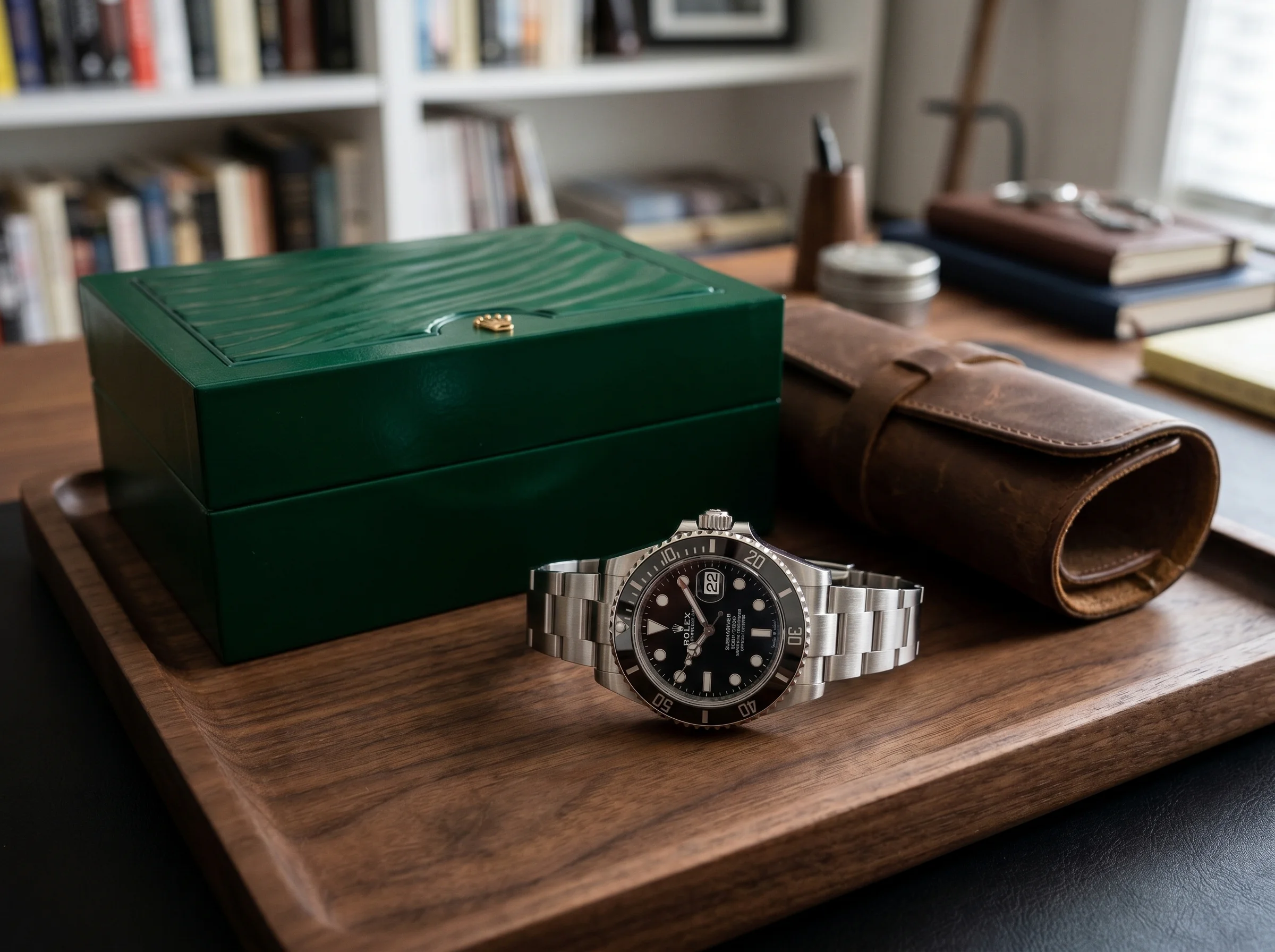 Buy the watch first, the set second. A great watch with a verified history beats a mediocre one with a perfect box.
For a modern watch you might resell, chase the full set and pay the fair premium. For a vintage piece, judge the watch first and treat surviving papers as a welcome bonus. And never, on anything, let a nice box talk you out of authenticating what is actually on your wrist.
Browse authenticated pre-owned watches at 5dwatches.com, where we are clear about exactly what comes with every watch.