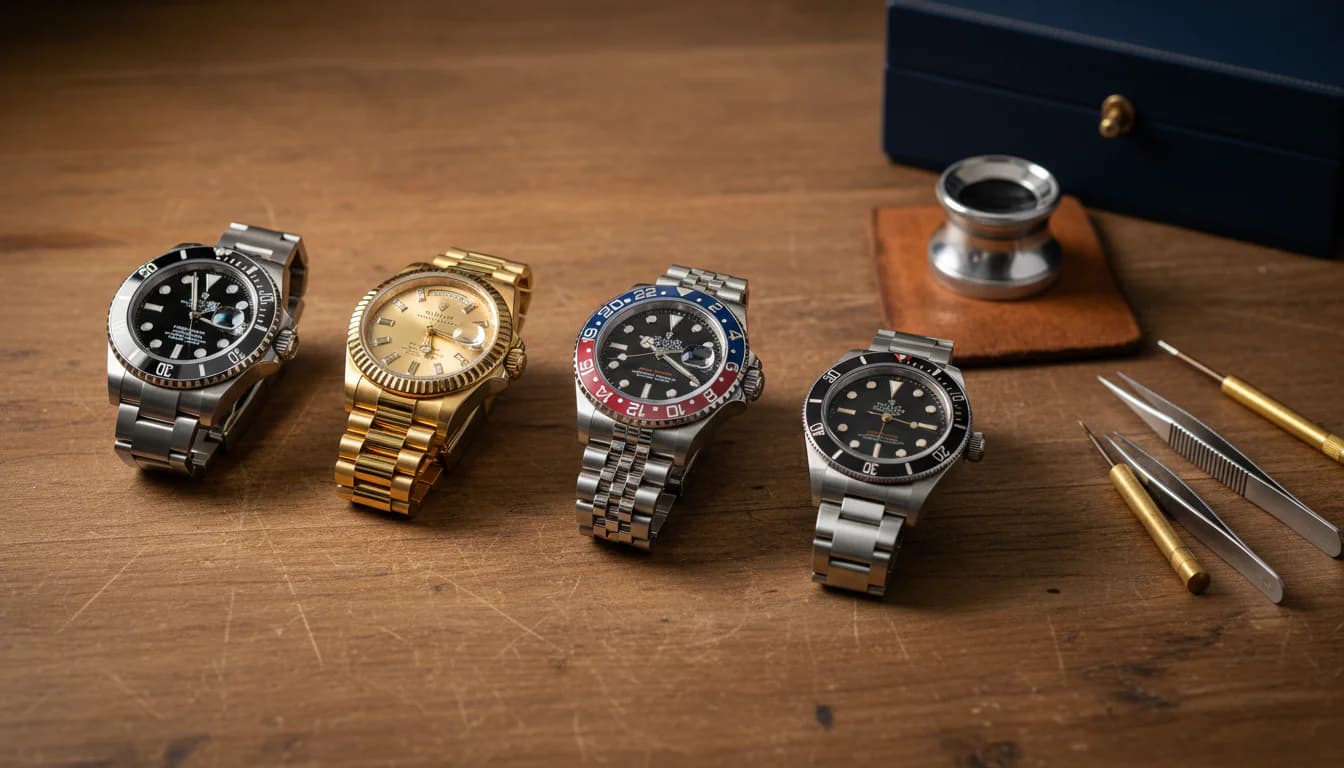
Two structural changes are reshaping the 2026 luxury watch market in ways that benefit one specific category: pre-owned.
The first is the 15% U.S. tariff on Swiss watch imports, which became permanent in late 2025 after a 99-day stretch of the harsher 39% rate. The second is gold trading above $4,500 per ounce as of April 2026, with banks and analysts forecasting continued upward pressure through year-end.
Combined with new-watch retail price increases averaging 5-10% across the major Swiss brands, a new gold Rolex now costs roughly 20% more than it did in late 2024 when all factors are considered. The pre-owned market is not subject to those same pressures.
Note on images: All images in this post are AI-generated and may not perfectly represent the actual watch references discussed. They are intended for illustration only.
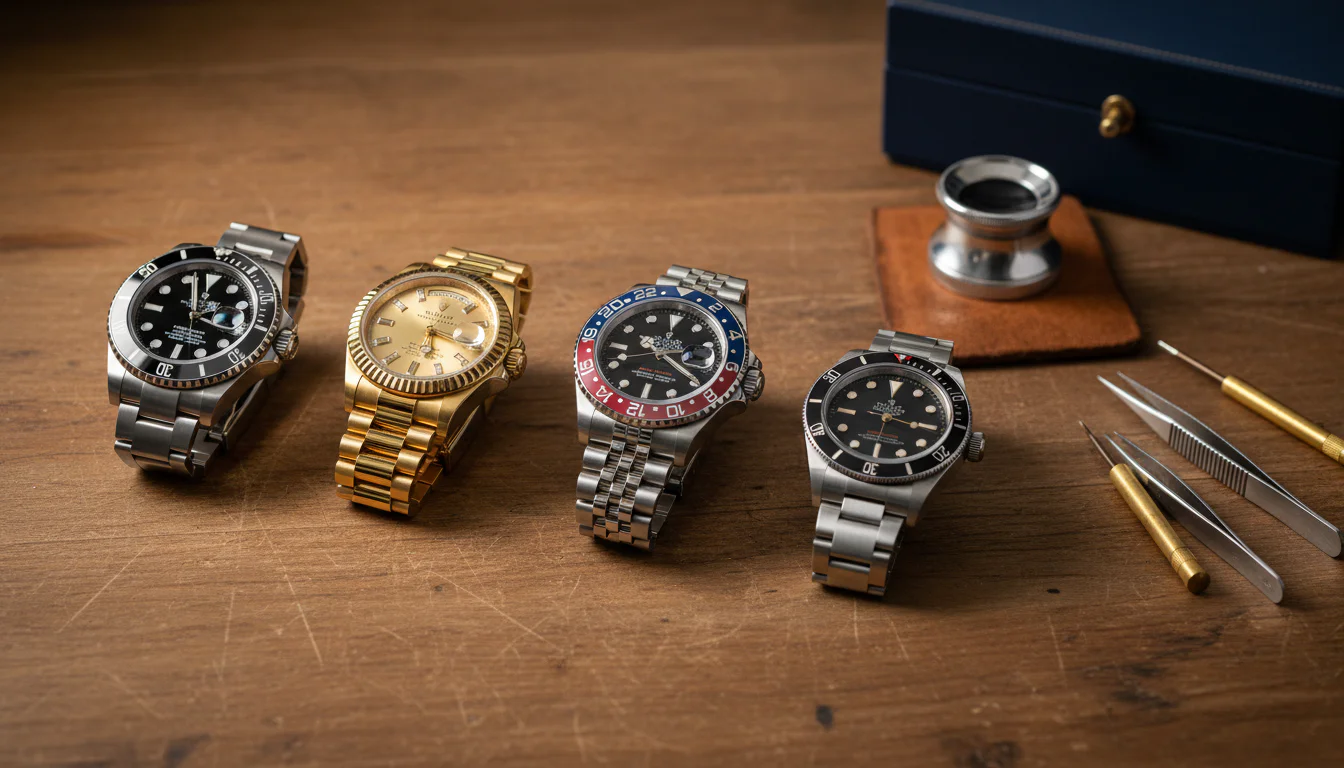 The 2026 pre-owned Swiss watch market sits in an unusually favorable position. New-watch retail pressures (15% tariff, gold prices, structural inflation) do not apply the same way to authenticated pre-owned inventory.
Here is the working dealer's read on what this means for buyers.
The short answer
A new gold Rolex in the U.S. costs roughly 20% more than it did in late 2024 due to combined tariff, gold price, and structural inflation effects. Pre-owned prices have risen, but more modestly: the Bloomberg Subdial Index gained 8% in 2025, and Chrono24 data shows pre-owned prices up 4.9%. The math now favors pre-owned more clearly than it has in years, especially on precious metal references where the retail-to-pre-owned gap has widened significantly.
The 15% tariff: how it actually works
The U.S. tariff on Swiss watch imports moved through three stages during 2025-2026.
| Period | Tariff Rate | Status |
|---|---|---|
| Pre-August 2025 | 0% (effectively) | No specific Swiss watch tariff |
| August 7 - November 14, 2025 | 39% | "Liberation Day" rate, lasted 99 days |
| November 15, 2025 onward | 15% | Permanent (per current trade agreement) |
Per LeWatchBuyers' April 2026 tariff analysis, the 15% rate is applied to the declared customs value (typically a wholesale or transfer-price figure) at the point the watch enters the U.S., not to the eventual retail price. But the duty cost flows through to retail pricing.
How brands responded
Major Swiss brands implemented two waves of price increases.
- Late summer 2025: Reactionary increases when the 39% rate took effect
- January 1, 2026: Larger structural increases once the 15% rate was confirmed permanent
Rolex's January 2026 increase averaged 7% across the U.S. catalog, the brand's third increase in a single year. Audemars Piguet and Tudor implemented their own structural increases at the same time, per WatchPro's January 2026 coverage.
Patek Philippe took a different approach. The brand raised U.S. prices during the 39% period but reduced authorized retailer margins to absorb part of the cost. The result was less-painful retail increases for buyers but tighter economics for ADs.
Gold above $4,500: how it compounds
Gold broke through £4,400 per ounce in late December 2025 and continued climbing through Q1 2026. The April 2026 spot price sits above $4,500 per ounce. Per Watchmaestro's market analysis, gold prices are tracking 20%+ above 2024 levels.
Why this matters for gold watches specifically
A gold watch is partly a watch and partly a bullion product.
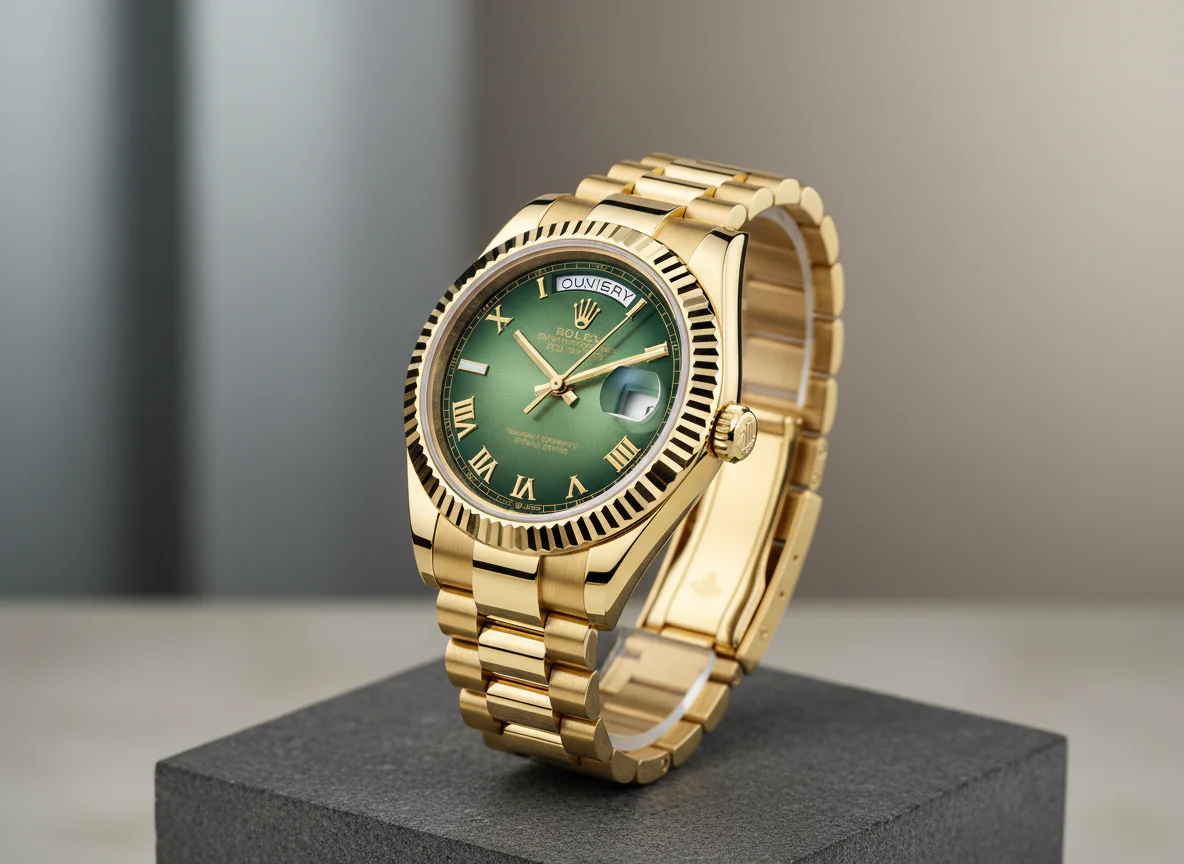 The Rolex Day-Date 40 in 18k yellow gold. With gold above $4,500/oz in 2026, the raw material cost alone has increased by roughly 20% versus 2024 levels. Retail pricing reflects that pressure.
The Rolex Day-Date 40 in yellow gold typifies the dynamic. It contains roughly 130 grams of 18k gold (approximately 4 troy ounces of gold content). At $4,500 per ounce, the raw gold value is approximately $13,500-$15,000 depending on the specific model. That is up from approximately $11,000-$12,500 in late 2024.
Rolex passed most of that increase to retail. The Day-Date 40 yellow gold Rolesor went from approximately $44,000 in 2025 to approximately $48,000 in 2026 - close to a 10% jump per WatchesOff5th's 2026 price increase tracker.
Steel models: the more modest effect
Stainless steel models received smaller adjustments, typically 2-6%. The Submariner 126610LN went from approximately $10,250 to approximately $10,800. The GMT-Master II 126710BLNR went from approximately $11,300 to approximately $12,000. Both increases reflect tariff and inflation pressure rather than raw material cost.
The pre-owned counter-narrative
Pre-owned prices have risen, but the rise has been smaller and more selective than retail increases.
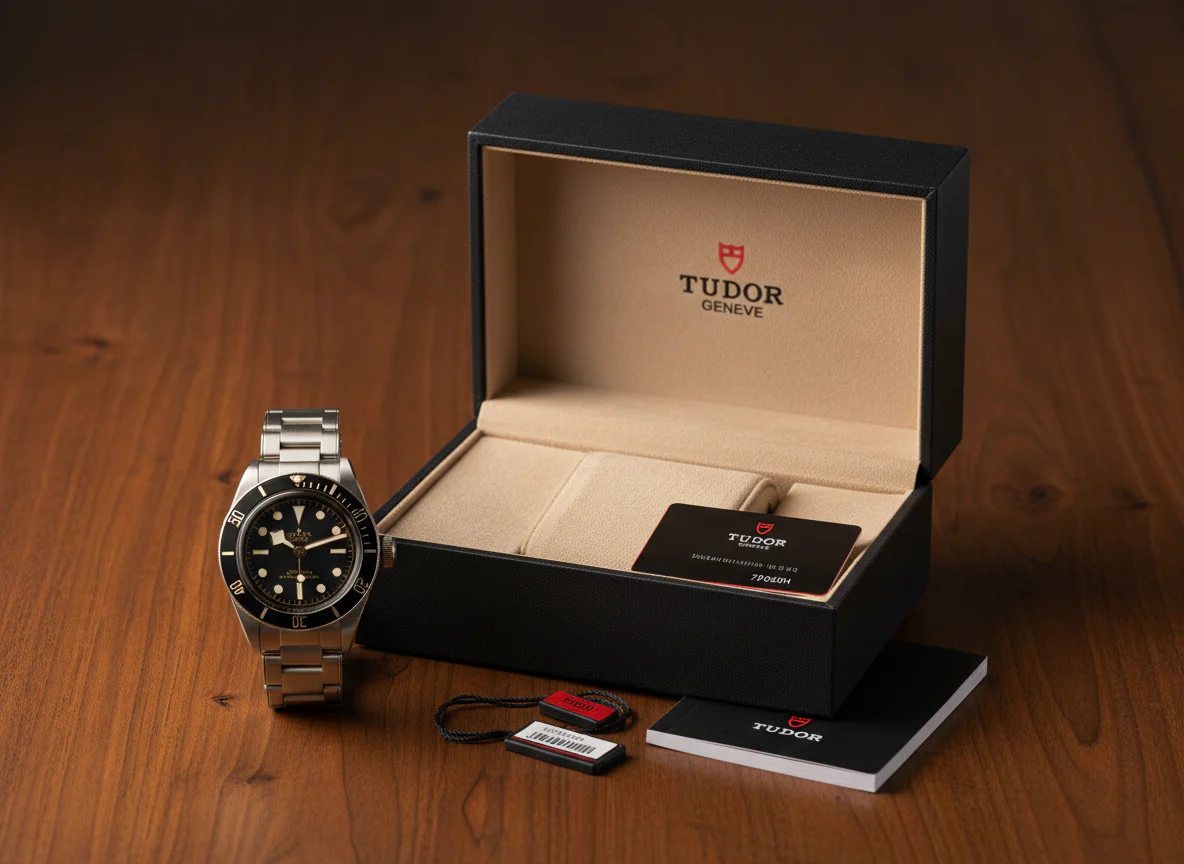 A pre-owned Tudor BB58 79030N with full set documentation. Pre-owned prices have risen modestly while new retail has climbed substantially, widening the value gap on many references.
The data, by source
- Bloomberg Subdial Watch Index: gained 8% in 2025, reaching a two-year high in early 2026
- Chrono24: pre-owned prices rose 4.9% in 2025 - the first positive year since 2022
- WatchCharts: 21 of 27 brands with average prices over $3,000 posted positive index performance in the six months ending February 2026
Brand-by-brand performance varied significantly:
| Brand | 12-Month Pre-Owned Price Change (Feb 2026) |
|---|---|
| Patek Philippe | +16.2% |
| Tudor | +11.4% |
| Rolex | +7.9% |
| Audemars Piguet | +3.4% |
Per LeWatchBuyers' tariff and pre-owned market analysis.
The widening retail-to-pre-owned gap
For specific references, the math has become more favorable for pre-owned buyers.
| Reference | New Retail (2026) | Pre-Owned Median (April 2026) | Pre-Owned Discount |
|---|---|---|---|
| Tudor Black Bay 58 79030N | $5,225 (new gen retail) | ~$2,809 | ~46% |
| Rolex Datejust 41 (steel) | ~$8,500 | ~$7,500 | ~12% |
| Rolex Submariner 126610LN | $10,800 | $13,000-$18,000 | Pre-owned premium |
| Rolex Day-Date 40 yellow gold | ~$48,000 | ~$38,000-$42,000 | ~17-21% |
| Rolex GMT-Master II 126710BLNR | $12,000 | $17,500-$21,000 | Pre-owned premium |
The pattern is clear. Sport watches still trade above retail. Dress watches, two-tone references, and gold pieces increasingly trade below retail.
For a deeper breakdown of which specific references hold value over time, see our watches that hold their value analysis.
Where the value math now lives
Three categories show particularly favorable pre-owned economics in 2026.
1. Gold and two-tone references
The retail premium driven by tariff plus gold price increases is largest here. Pre-owned examples typically run 15-25% below current retail, depending on condition and completeness. A pre-owned Day-Date in yellow gold at $40,000 versus a new retail of $48,000 is a meaningful difference, especially when the 4-5 year-old example is mechanically identical.
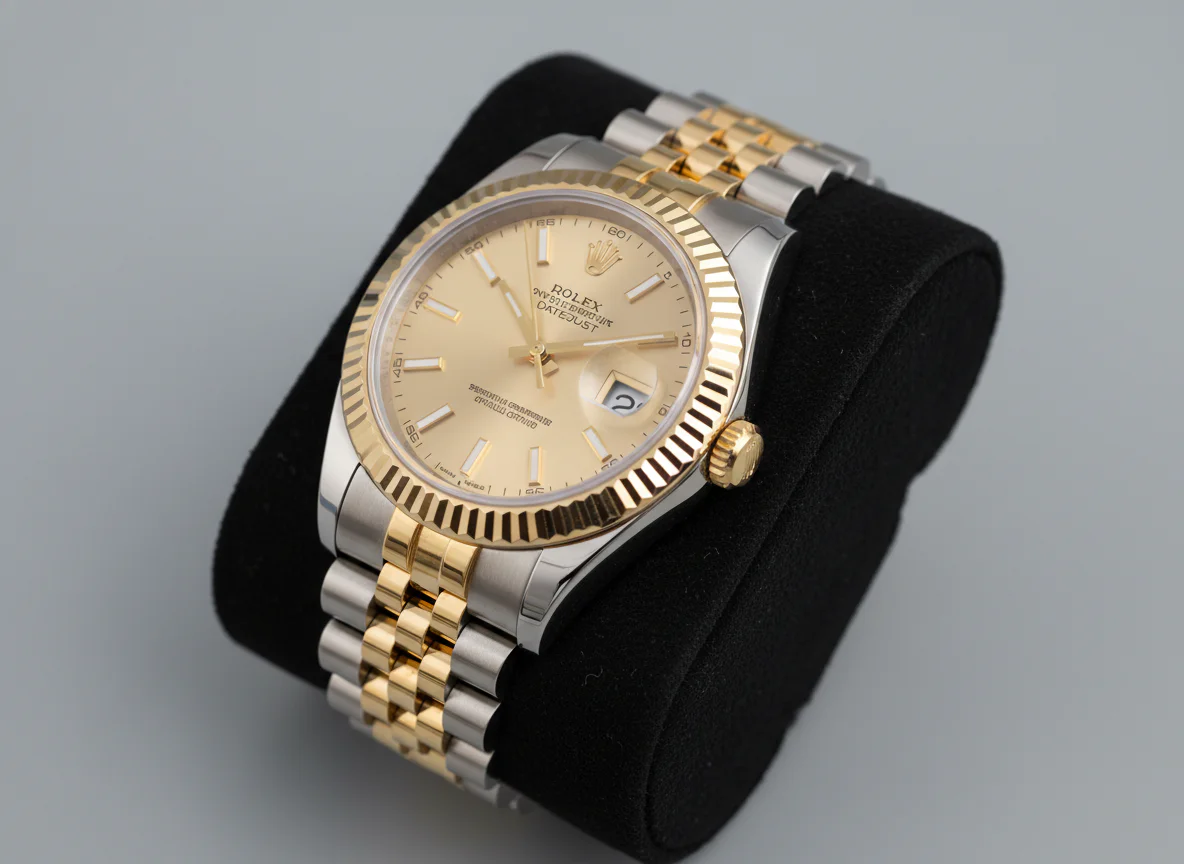 Two-tone Rolex references like the Datejust 41 in yellow Rolesor have shifted into a more favorable pre-owned price position. Retail premiums driven by gold and tariff increases now create meaningful gaps to pre-owned alternatives.
2. Dress watches under $10,000
Mid-tier dress watches (Tudor 1926, Tudor Royal, Omega De Ville, Longines Master Collection) trade well below retail on the secondary market. The retail increases hit these references too, while pre-owned supply remained stable.
For a complete breakdown of options at this price tier, see our best dress watches under $5,000 guide.
3. Recently discontinued sport references
Watches that exited the catalog in 2025-2026 (Pepsi GMT, Cookie Monster Submariner, Yacht-Master II 116680/116681) are the exception case. These trade above retail. But for buyers who specifically want a discontinued reference, the pre-owned market is the only path. Authorized dealers cannot deliver them.
For broader context, see our Pepsi GMT discontinuation analysis and our complete 2026 W&W discontinuations list.
What does NOT favor pre-owned right now
Two important caveats.
Steel sport Rolex remains a sellers' market
Submariners, GMT-Master IIs, and Daytonas still trade above retail on the secondary market. The combined effect of tight authorized dealer allocations and continued demand keeps premium pricing in place. A steel Submariner pre-owned at $14,000 versus a new retail of $10,800 means the pre-owned buyer is paying for the watch plus the privilege of skipping the waitlist.
For most buyers, that premium is defensible because the alternative is waiting 12-24 months at an authorized dealer. But this is not the same value math as a pre-owned gold Day-Date at 17% below retail.
Newest references trade at premiums
Newly released references with thin secondary supply (the 2026 Yacht-Master II, the Tudor Monarch, the Rolesium Daytona) trade above retail in the first 6-18 months. As production normalizes, these premiums typically compress. Buyers who want these specific watches now face the same pre-owned premium dynamic as steel sport Rolex.
How to think about it
Three buyer profiles, three different right answers.
If you want a steel sport Rolex
The pre-owned premium is structural and unlikely to compress meaningfully in 2026. Buy at the AD if you can, accept the waitlist, or pay the secondary market premium. Either is defensible. The math will not get materially better in the near term.
If you want a gold or two-tone Rolex
Pre-owned wins more clearly than it has in years. Retail increases plus gold price effects have widened the gap to 15-25% on most references. A pre-owned full-set example with verified service history is genuinely the better economic choice.
For our framework on what a working dealer actually checks before buying pre-owned, see the authentication checklist.
If you want a Tudor, Omega, Grand Seiko, or independent brand
Pre-owned strongly favored. These brands have not seen the same retail price escalation as Rolex, and pre-owned discounts to retail are larger. A pre-owned Tudor Black Bay 58 at $2,809 versus a new generation at $5,225 is the cleanest math in the entire luxury watch market right now.
The dealer's recommendation
The 2026 market does not have a single right answer. It has three different ones depending on what you are buying.
Pre-owned does not always beat new retail. But the gap has widened more in 2026 than at any point in the last five years on specific categories: gold watches, dress watches, and most non-Rolex Swiss brands. If you are price-sensitive on those categories, the pre-owned math is now strongly in your favor.
For sport Rolex, the calculus is unchanged. For everything else, 2026 is the year the pre-owned argument got stronger.
Browse our authenticated pre-owned inventory at 5dwatches.com/shop. Every piece is hand-inspected for authenticity, condition, and service history before it goes up. We carry Rolex, Tudor, Omega, Patek Philippe, Audemars Piguet, and Vacheron Constantin.