A watch winder is one of those accessories that looks essential in a display case and turns out to be optional in real life. It is a small motorized box that gently rotates an automatic watch so it keeps running while you are not wearing it.
The question is not whether winders work. They do. The question is whether you actually need one, and the honest answer depends entirely on what you own and how you wear it.
Here is a working dealer's read on when a winder earns its place, when it is just a nice piece of desk furniture, and how to use one without hurting your watch.
The short answer: A winder only matters for automatic, self-winding watches, and even then it is a convenience rather than a maintenance requirement. Buy one if you rotate several automatics or own a calendar watch that is a chore to reset. Skip it if you wear a single simple automatic. You cannot overwind a modern automatic, so the real risks are cheap motors and magnetism, not too much winding.
The images in this article were generated with AI for illustration, conditioned on real reference photography of the watches shown. They depict recognizable models but are not photographs of specific watches for sale.
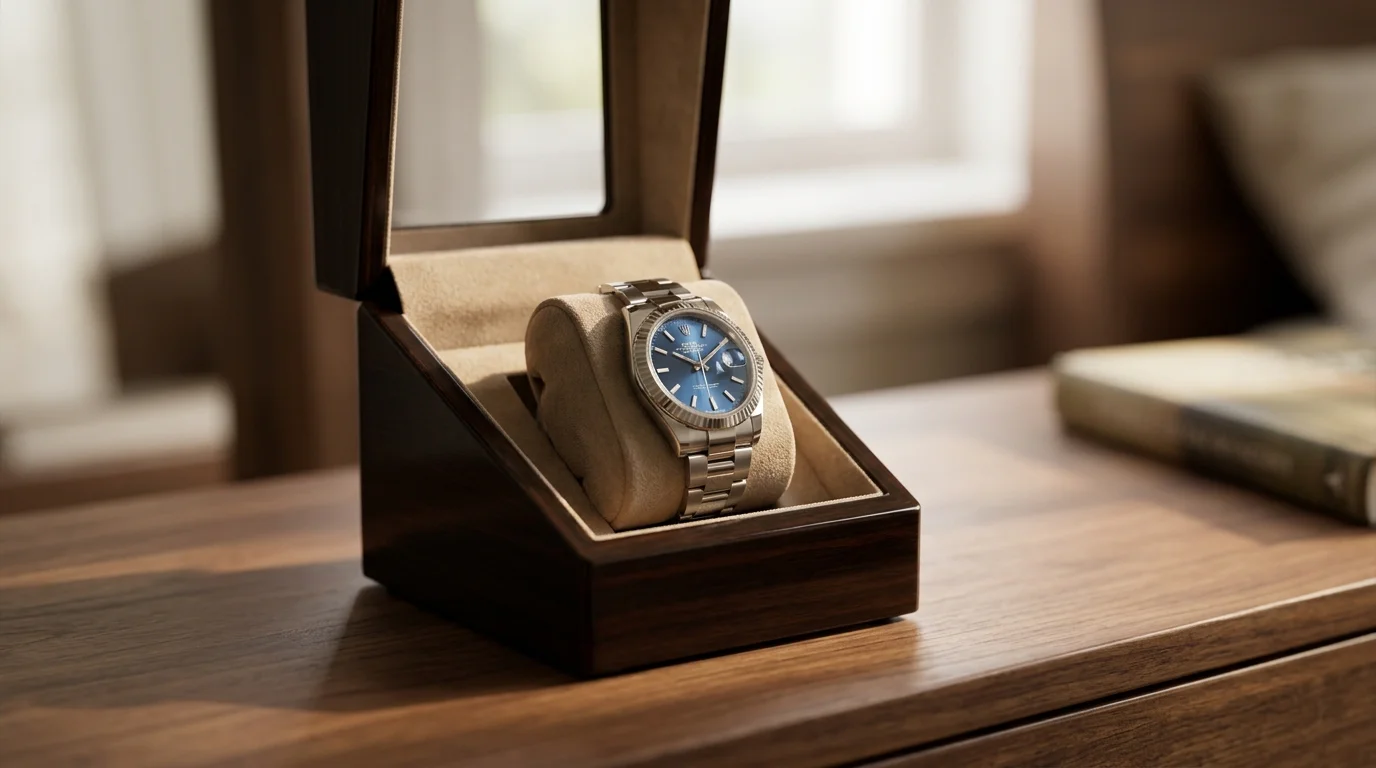
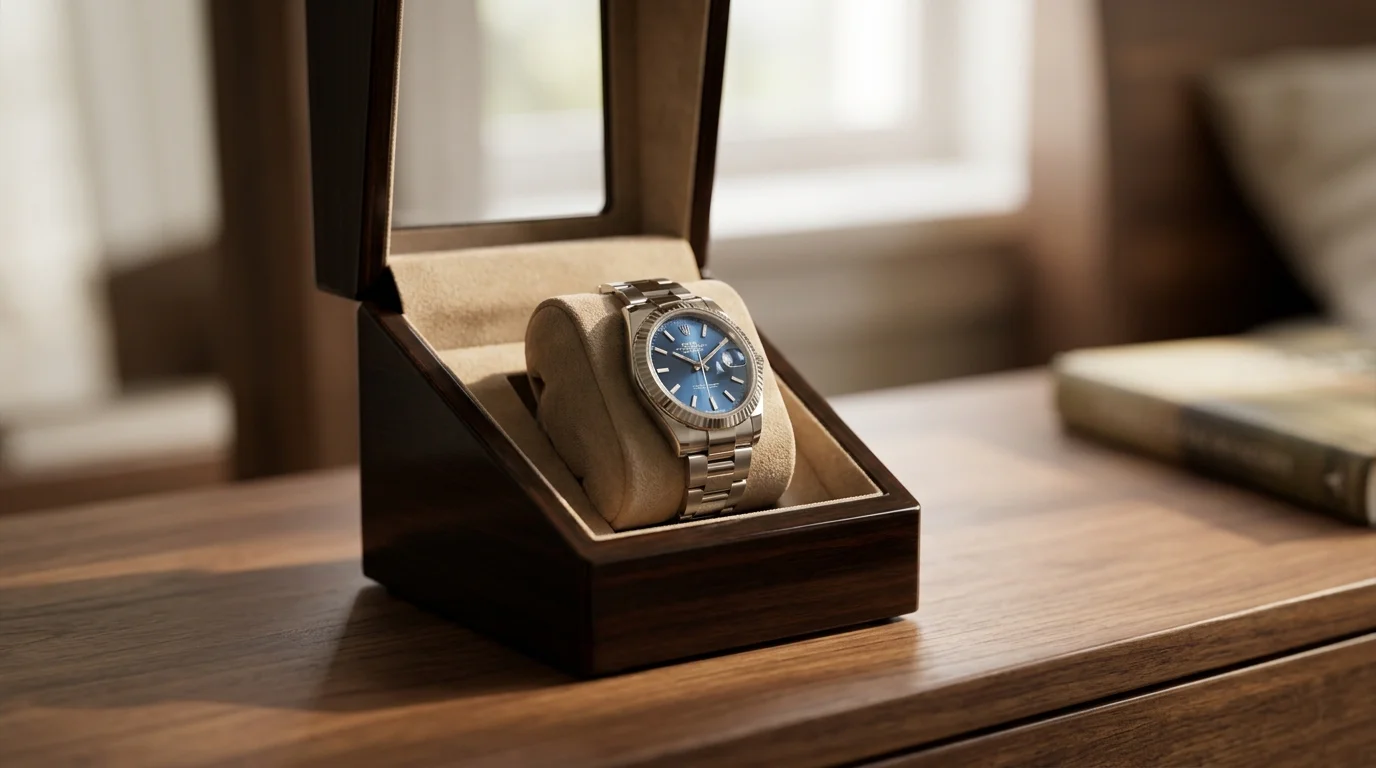 A winder keeps an automatic like this Datejust wound and ready. Whether you need that is a different question.
What a Watch Winder Actually Does
A winder mimics your wrist. It turns the watch on a slow cycle so the automatic movement's rotor keeps the mainspring wound while the watch sits off your arm.
Keep it wound and the watch keeps running, which means the time stays set and any calendar or moonphase display stays correct. That is the entire pitch: you pick the watch up ready to wear instead of resetting it.
It Only Matters for Automatics
This is the part people miss. A winder does nothing useful for two of the three watch types you might own.
A manual-wind watch is wound by hand through the crown, so a winder is pointless. A quartz watch runs on a battery and has no mainspring to keep tensioned. Only an automatic, which winds itself from motion, gets anything at all from a winder.
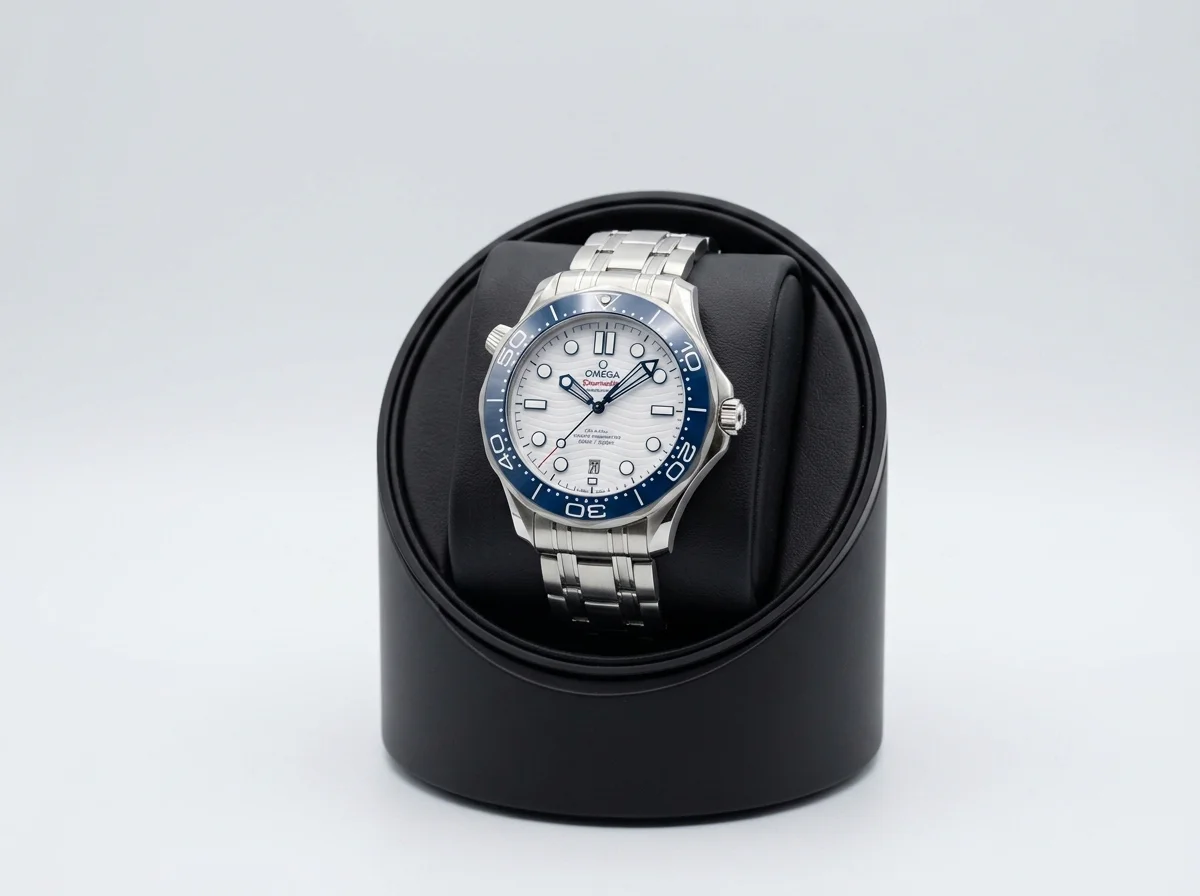 A Seamaster Diver 300M on a winder. The rotor only stays fed because the watch is self-winding.
Do You Actually Need One?
For most people with one everyday watch, the honest answer is no. The case for a winder gets stronger as your collection and your complications grow.
Yes, If You Rotate Watches or Own a Calendar
Two situations make a winder genuinely useful rather than decorative.
The first is a rotation. If you own several automatics and wear a different one each day, the ones resting all stop, and you reset each as it comes back into service. A winder keeps them ready.
The second is a complicated calendar. An annual calendar, a perpetual calendar, or a full day-date with a moonphase is slow and fiddly to reset, and a perpetual calendar in particular is designed to never be reset if you can help it. Keeping those watches wound on a winder is the sensible move.
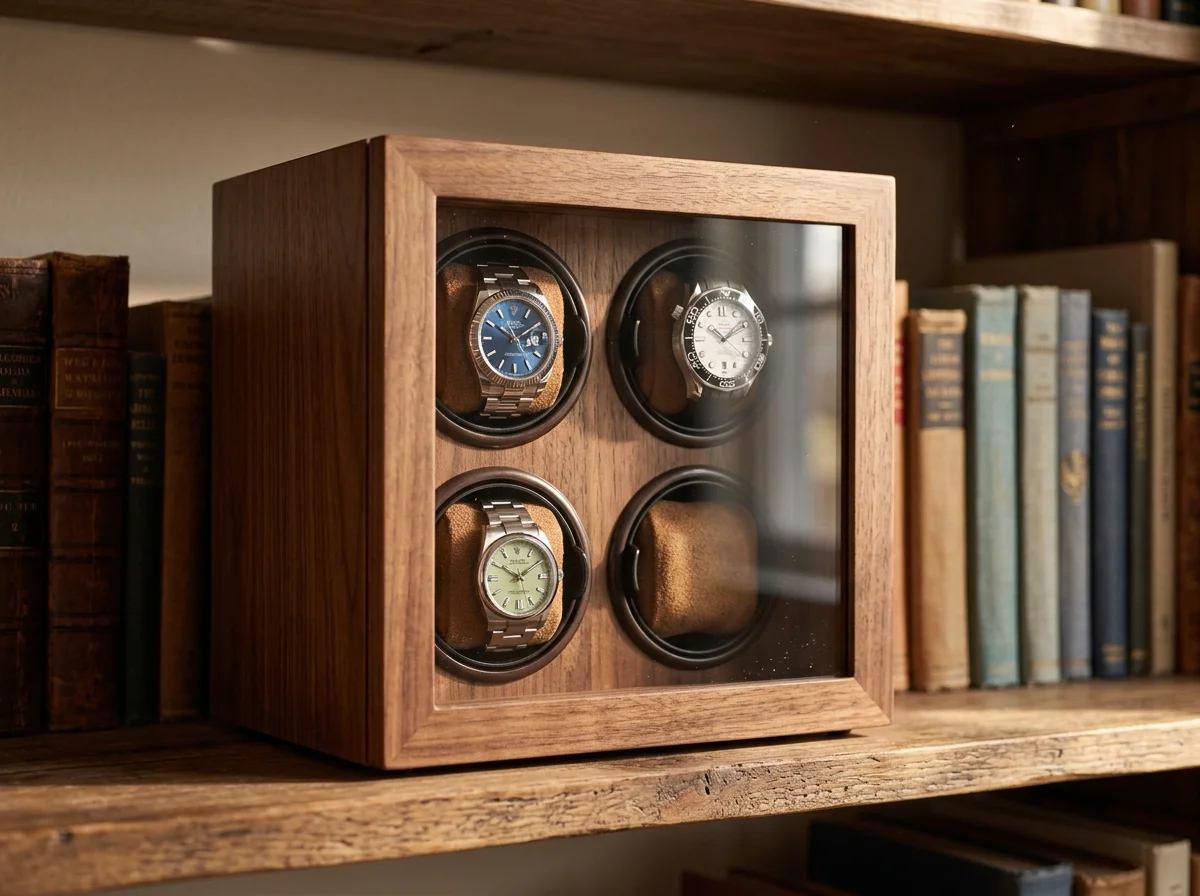 A multi-watch winder earns its keep when you rotate several automatics like these.
No, If You Wear One Simple Automatic
If you own a single date-only or three-hand automatic and wear it most days, you do not need a winder.
A watch like a Datejust takes about ten seconds to reset: pull the crown, set the time and date, push it back. Buying a motor to save that ten seconds is a luxury purchase, not a practical one, and there is nothing wrong with that as long as you know which one it is.
The Overwinding Myth, Settled
The most common fear about winders is that they will overwind and damage a watch. For any modern automatic, that cannot happen.
Every automatic movement uses a slip clutch, a bridle on the mainspring that slips once the spring is fully wound and dumps the extra energy. Patek Philippe co-founder Adrien Philippe patented the slipping-spring idea back in 1863, and it has protected self-winding watches ever since. Wind it, wear it, or leave it on a winder: the mainspring simply will not take more than it can hold.
The Real Risks Are Magnetism and Cheap Motors
The genuine downsides come from buying cheap, not from winding too much.
A poorly shielded budget winder can magnetize a movement over time, which throws off accuracy until the watch is demagnetized. A winder with no rest cycles that spins constantly makes the slip clutch engage over and over, adding wear to a part that should rarely work hard. Cheap units are also often noisy enough to keep out of a bedroom. Spend enough to get shielding, programmable cycles, and a quiet motor.
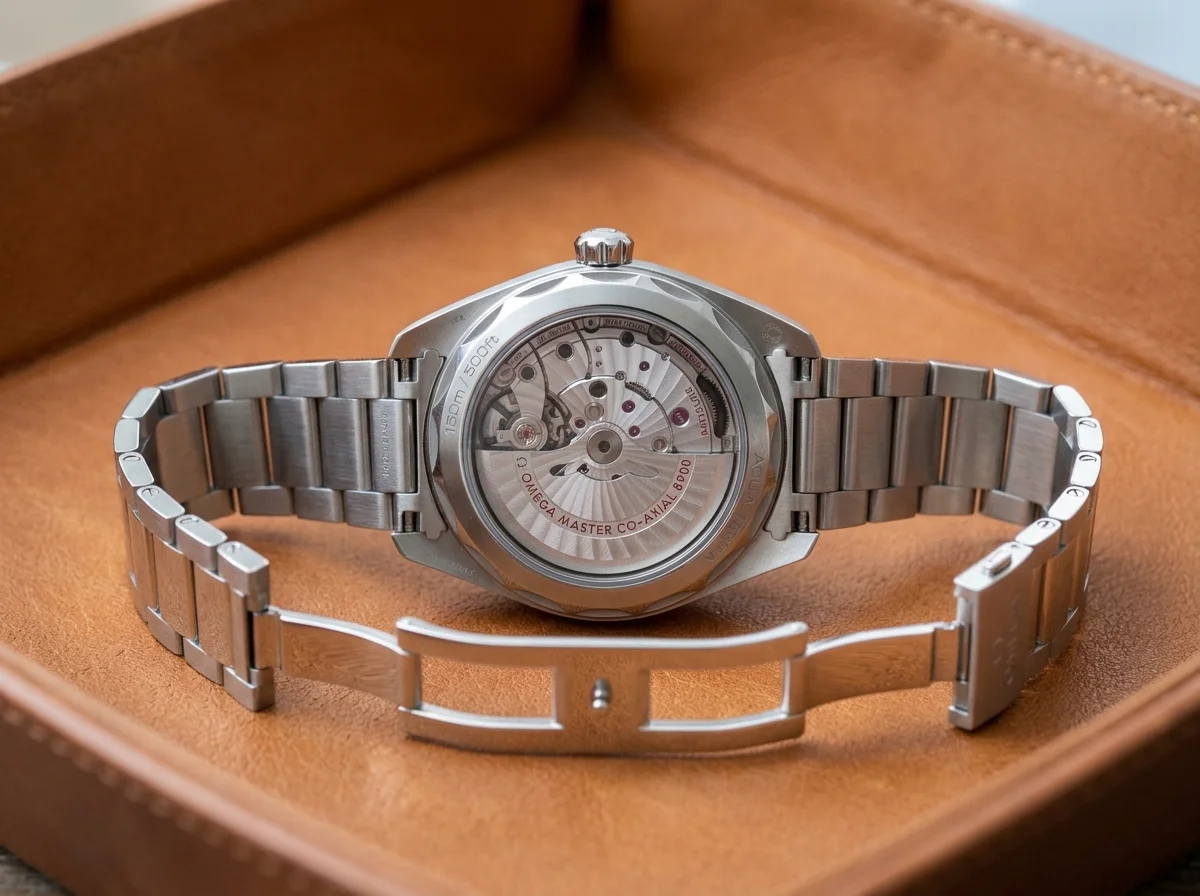 The rotor spinning behind this Aqua Terra's exhibition caseback is exactly what a winder keeps fed. A slip clutch stops it from ever winding too far.
Setting One Up Right: TPD and Direction
If you do use a winder, two settings decide whether it actually keeps your watch wound.
Turns per day, or TPD, is the number of rotations the movement needs each day. Most automatics want 650 to 900 TPD, with a Rolex sitting near the low end around 650 and some higher-complication movements needing more, as winder guides like Teddy Baldassarre's lay out. Direction matters too, since some movements wind clockwise, some counterclockwise, and some both ways.
| Setting | What it controls | Typical value |
|---|---|---|
| Turns per day (TPD) | How much the winder winds daily | 650 to 900 for most watches |
| Direction | Which way the rotor is wound | Clockwise, counterclockwise, or bidirectional |
| Rest periods | Pauses so the winder is not spinning constantly | Built into quality units |
Set the TPD too low and the watch still stops. Set the direction wrong and a unidirectional rotor barely winds. Match the setting to your specific movement and the winder does its job.
What to Spend
Winders run from pocket change to the price of a watch, and the bottom of the range is where the risk lives.
Under $100, you are gambling on magnetism, fixed TPD, and motor noise. The $150 to $400 band is where adjustable, well-shielded, genuinely quiet units start, from makers like Wolf, Rapport, and Barrington. Above $1,000, you are paying for a display object as much as a tool, from names like Scatola del Tempo and Döttling. Buy for the shielding and the programmability, not the veneer.
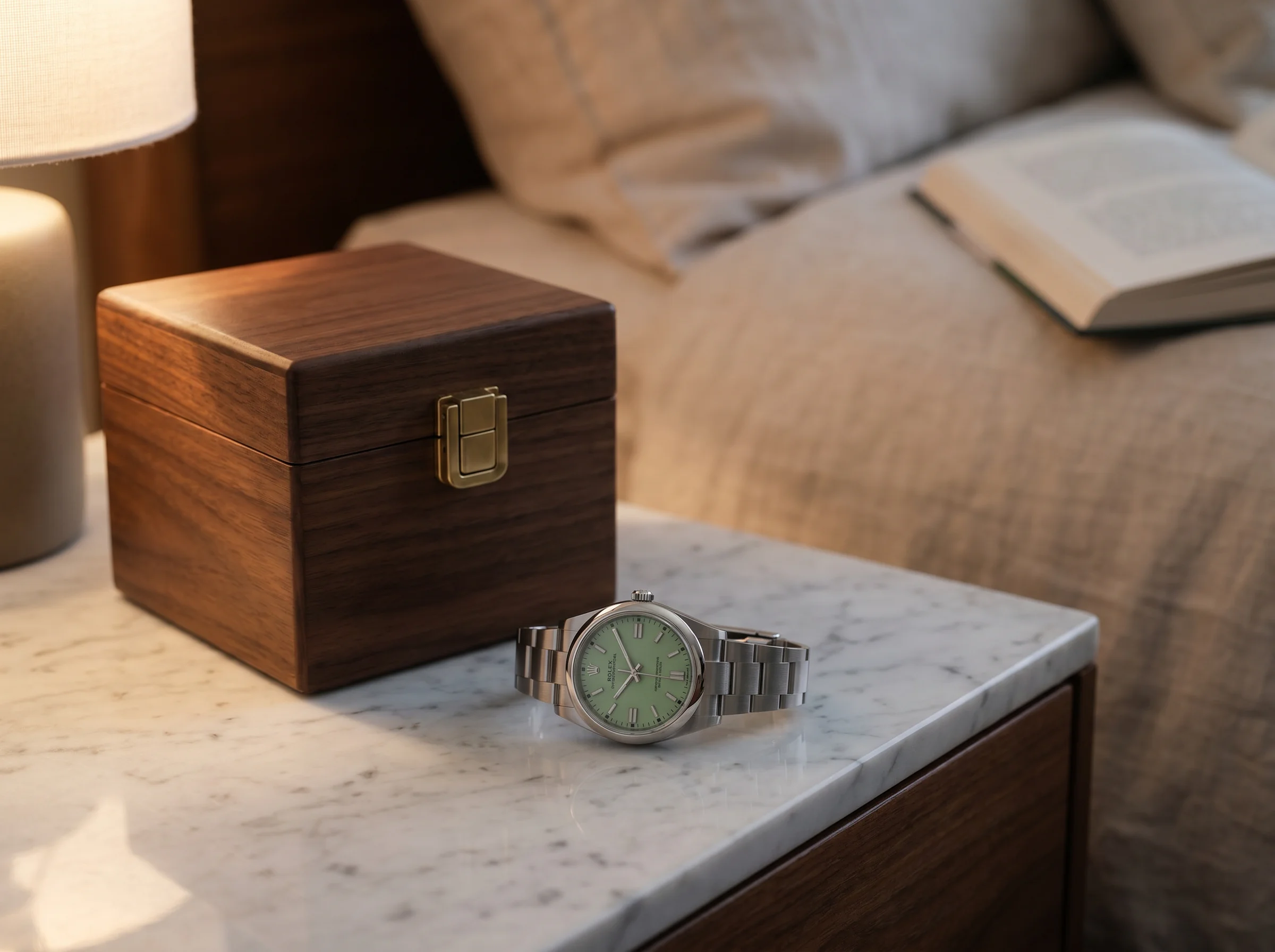 For a single automatic you wear daily, like this Oyster Perpetual, the nightstand works fine. The winder is a want, not a need.
The Bottom Line
A watch winder is a convenience that a specific kind of owner should buy and everyone else can skip. If you rotate several automatics or live with a perpetual calendar, a good winder earns its shelf. If you wear one simple automatic, your wrist is the only winder you need.
So before you buy the winder, be honest about how many automatics you actually rotate. For most people the answer is one, and the ten seconds it takes to reset it is cheaper than any box.
Frequently Asked Questions
Do you need a watch winder?
Only if you own an automatic watch, and even then it is optional. A winder is genuinely useful if you rotate several automatics or own a calendar watch that is a chore to reset. For a single simple automatic you wear most days, resetting it takes seconds, so a winder is a luxury rather than a need.
Can a watch winder overwind or damage your watch?
No, not a modern automatic. Every automatic movement has a slip clutch that releases extra energy once the mainspring is full, so it cannot be overwound. The real risks come from cheap winders: poor magnetic shielding can magnetize the movement, and constant spinning with no rest cycles adds needless wear.
What TPD should a watch winder be set to?
Most automatic watches need 650 to 900 turns per day. A Rolex sits near the low end around 650, while some higher-complication movements need more. Match the TPD and the winding direction (clockwise, counterclockwise, or both) to your specific movement, since the wrong settings leave the watch under-wound.
Do you need a winder for a Rolex?
Not for a single Rolex you wear regularly, since a Submariner or Datejust resets in seconds. A winder makes sense if you own several Rolex automatics in rotation. If you do use one, set it to roughly 650 TPD with bidirectional winding to match Rolex's Perpetual movements.
Are cheap watch winders bad?
They can be. Budget winders under about $100 often lack magnetic shielding, use fixed TPD settings that do not match your watch, and run loud. A poorly shielded motor can magnetize a movement over time. If you buy a winder, spend enough to get shielding, adjustable settings, and a quiet motor.