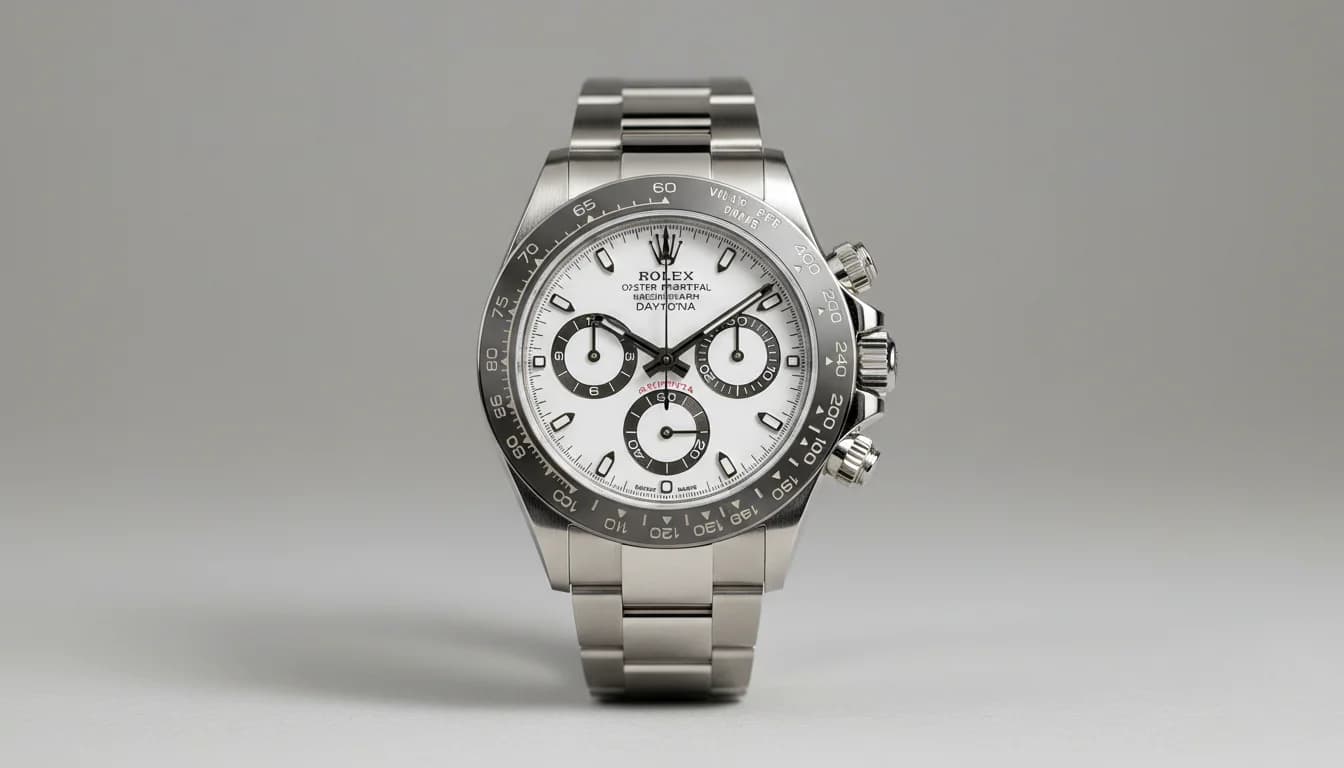
Rolex does not do exhibition casebacks on standard production watches. The brand's design philosophy treats the caseback as a sealed component that protects the movement, full stop.
Until Watches and Wonders 2026.
The new Rolex Cosmograph Daytona Rolesium (ref. 126502) broke that rule. For the first time on a steel Daytona in the brand's seven-decade history, you can see the movement through a transparent sapphire crystal caseback. Combined with a grand feu enamel dial and a new Oystersteel-and-platinum case construction, this is arguably the most significant Daytona release of the modern era.
Note on images: All images in this post are AI-generated and may not perfectly represent the actual watch references discussed. They are intended for illustration only.
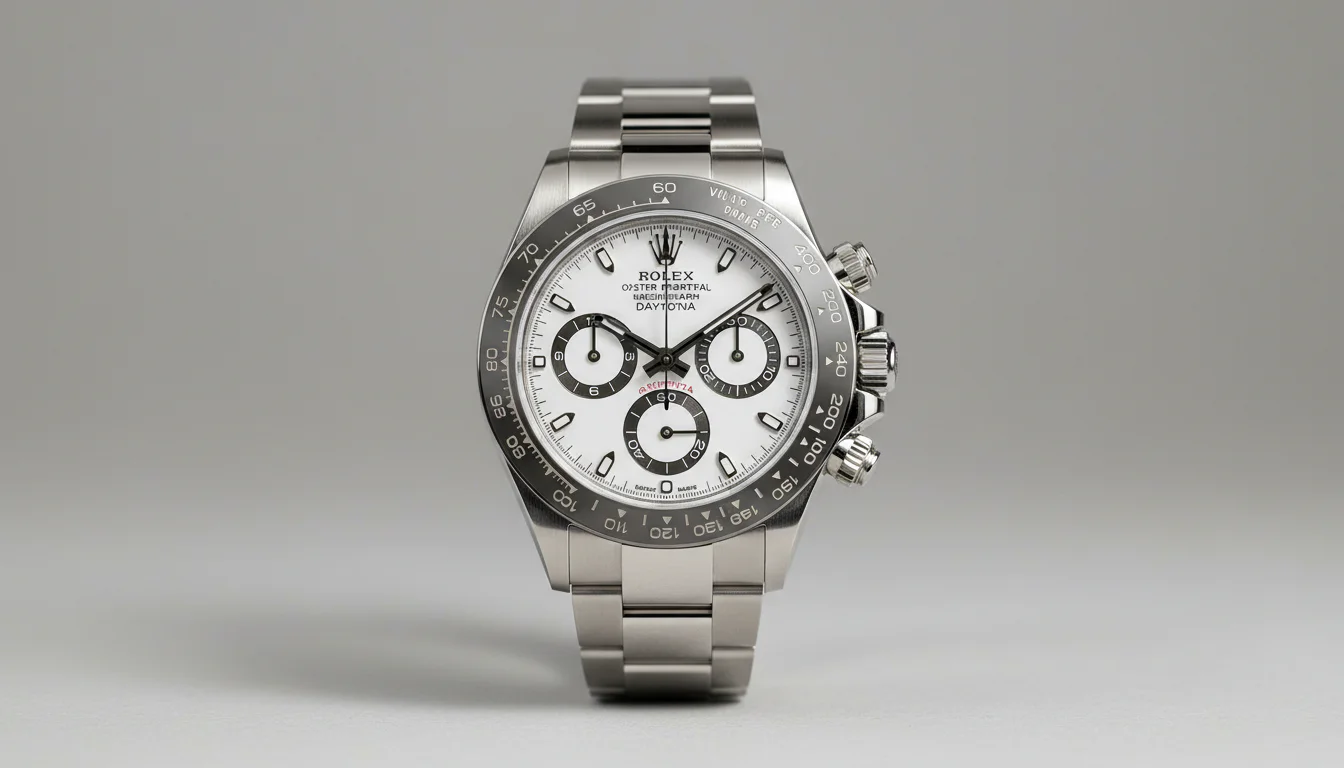 The Rolex Cosmograph Daytona Rolesium (ref. 126502). The first steel Daytona ever with a sapphire caseback, paired with a white grand feu enamel dial and platinum bezel.
Here is the working dealer's read on what changed and what it means for the Daytona market.
The short answer
The Rolesium Daytona pairs an Oystersteel middle case with platinum components (caseback ring, bezel platinum coating, tachymetric scale) and a white grand feu enamel dial. It is part of Rolex's "Exceptional Watches" tier, meaning extremely limited production. Estimated retail in the $40,000-$50,000 range for the Rolesium variant. The sapphire caseback is the bigger story than the materials. This is Rolex signaling a willingness to break its own design conventions when the watch warrants it.
What "Rolesium" actually means
Rolex coined the term Rolesium in 1999 for the original Yacht-Master configuration that paired Oystersteel cases with platinum bezels. It is a Rolex-trademarked construction, not a metallurgical alloy.
The 2026 Daytona application takes that concept further. The case middle remains Oystersteel for durability and weight balance. The platinum components include:
- The bezel coating: applied platinum on the tachymetric scale numerals via PVD
- Bezel insert edge framing: platinum surrounds the anthracite Cerachrom ceramic bezel insert
- Caseback ring: platinum frames the sapphire exhibition window
The result is a watch that reads as steel from a casual glance but reveals platinum detail on closer inspection. Per Oracle of Time's W&W 2026 Rolex coverage, the construction effectively reframes what the Oyster case can be after a century of evolution.
The grand feu enamel dial
The dial is the part most collectors are talking about.
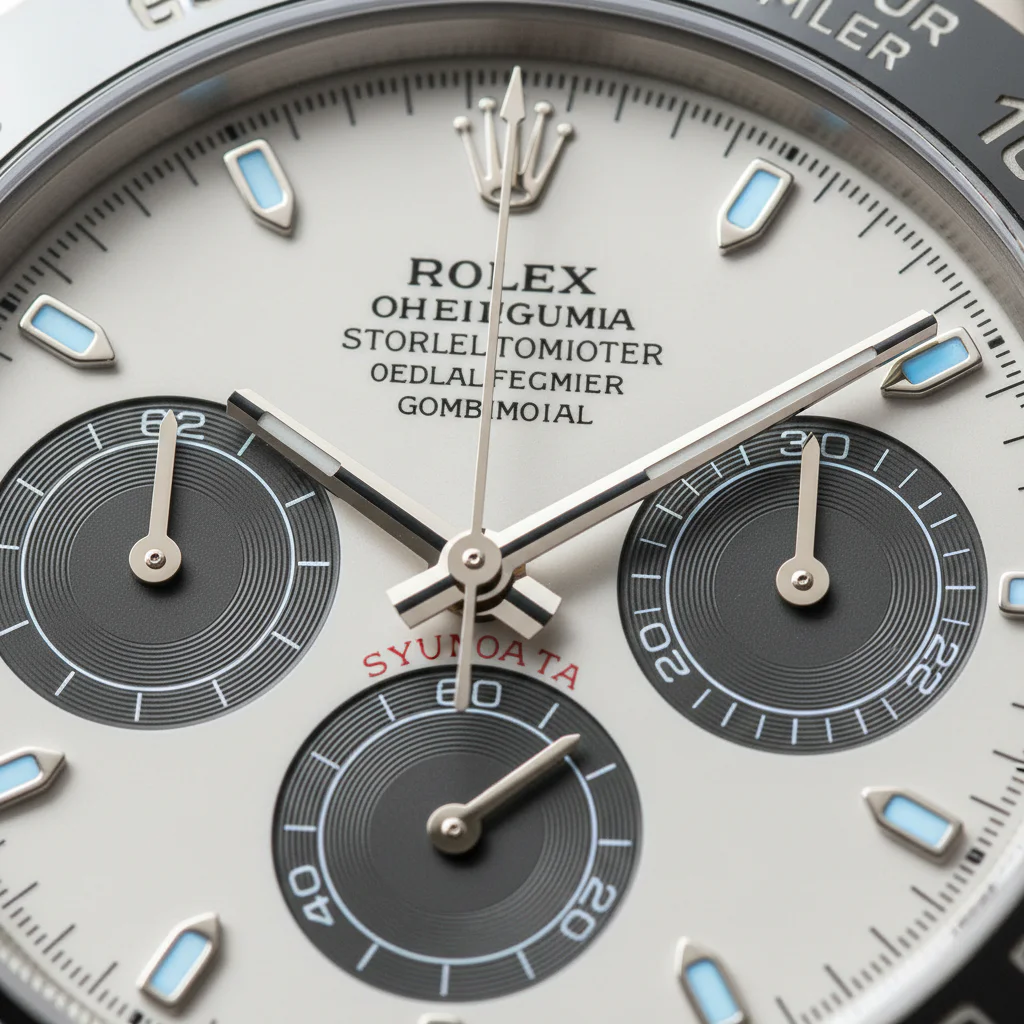 The grand feu enamel dial of the Rolesium Daytona. White dial with three contrasting sub-dials at 3, 6, and 9 o'clock. Grand feu enamel ages distinctively over decades, which is part of why it is such a sought-after dial finish.
Grand feu is French for "great fire." The technique fires powdered enamel onto a metal base at temperatures above 800°C, repeated across multiple firings to build up the dial in layers. Each firing risks cracking, bubbling, or color shift, which is why fully successful grand feu dials have a high reject rate during manufacture.
Rolex has used grand feu enamel before, but rarely on production sport watches. Most enamel Rolex dials live in the Day-Date and exceptional Datejust range, not in the Cosmograph Daytona line.
The dial layout follows the classic Panda configuration: white main dial with three contrasting sub-dials. Applied indices in 18k white gold provide the hour markers, finished with Chromalight luminous material.
The sapphire exhibition caseback
This is where the watch makes its biggest design statement.
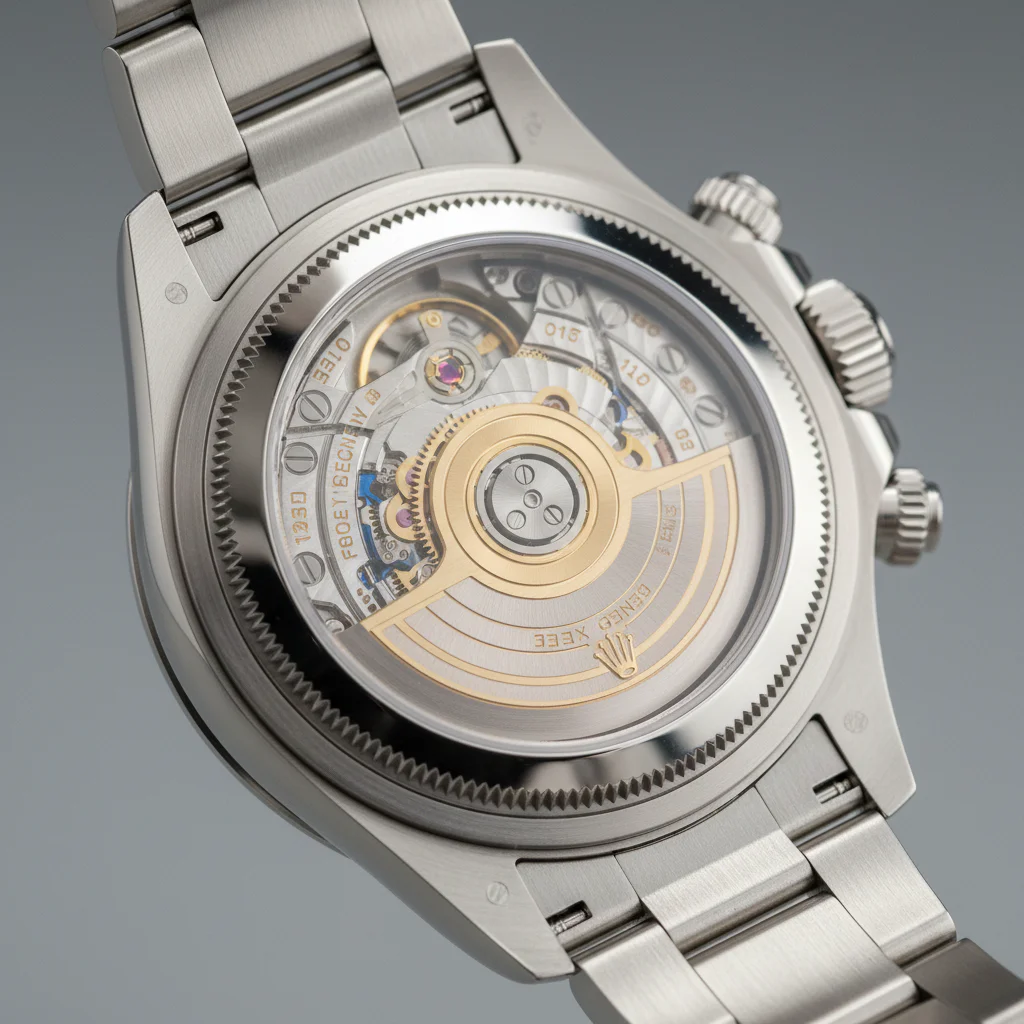 The Rolesium Daytona's sapphire exhibition caseback reveals the caliber 4131 chronograph movement. Rolex's first steel Daytona with a transparent caseback in the brand's seven-decade history.
The Rolex caliber 4131 is the same column-wheel chronograph movement that powers the standard steel Daytona reference 126500LN. Specifications:
- 70-hour power reserve with the new Chronergy escapement
- Free-sprung balance with Microstella regulating weights
- Parachrom blue hairspring for anti-magnetism
- Vertical clutch chronograph engagement (smoother seconds-hand start)
- COSC chronometer certified to -2/+2 seconds per day
What makes this notable is not the movement itself, which has been in production since 2023. It is that Rolex has chosen to show it.
The Cosmograph Daytona has always been one of Rolex's most secretive references. Casebacks have been solid steel, sealed and stamped. Even special editions like the Daytona Beach (2017) and Le Mans (2023) kept the caseback closed. The decision to open up the Daytona for the first time signals that Rolex sees the Rolesium variant as something genuinely different from the standard catalog watches.
How it compares to the standard steel Daytona
The standard Cosmograph Daytona reference 126500LN has been the benchmark for steel chronographs since its 2023 release.
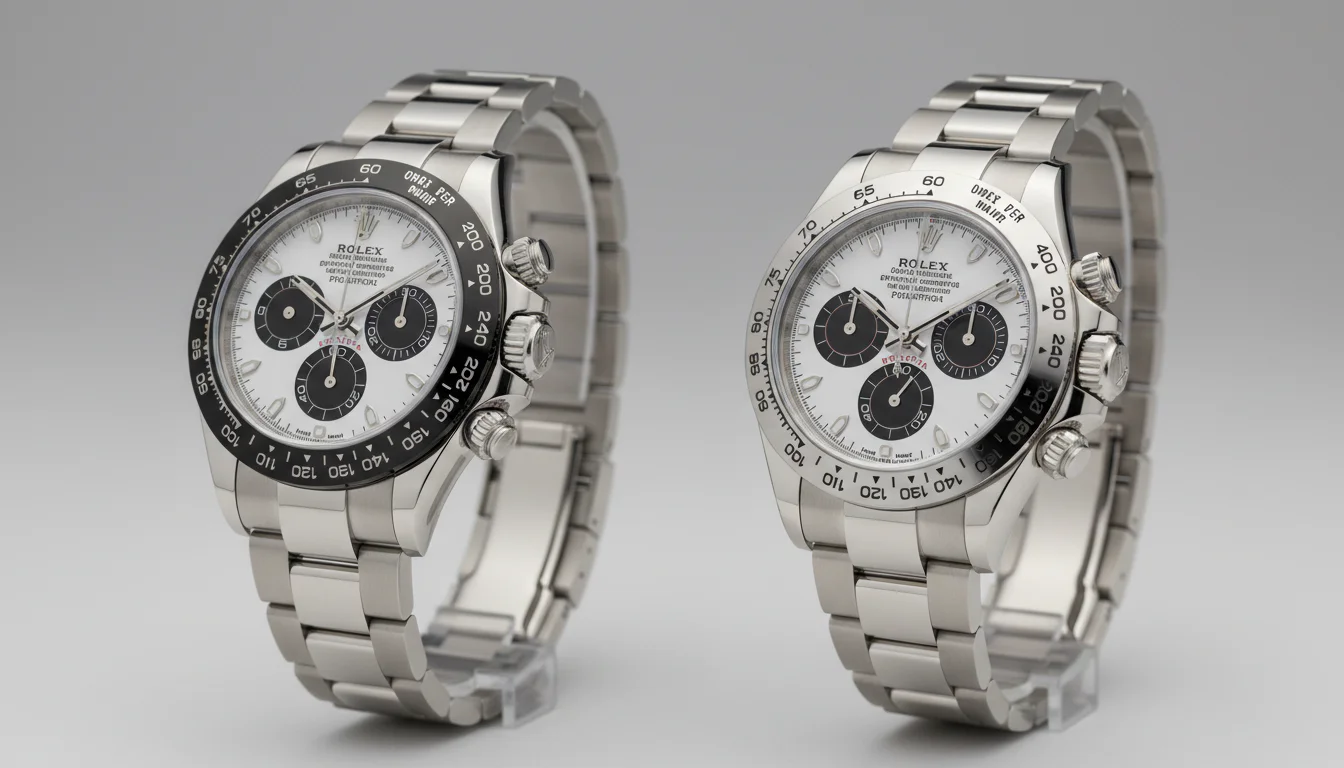 The Rolex Daytona Panda (ref. 126500LN), the standard steel Daytona that has been in production since 2023. The Rolesium 126502 sits above it in the catalog as part of the "Exceptional Watches" tier.
| Specification | Daytona 126500LN (Panda) | Daytona 126502 (Rolesium) |
|---|---|---|
| Case material | Oystersteel | Oystersteel + platinum |
| Bezel | Cerachrom black or white | Cerachrom anthracite + platinum |
| Dial | Lacquered, white or black | Grand feu enamel, white |
| Caseback | Solid Oystersteel | Sapphire crystal exhibition |
| Movement | Caliber 4131 | Caliber 4131 |
| Retail (2026) | $16,900 | Estimated $40,000-$50,000 (TBC) |
| Catalog status | Standard production | "Exceptional Watches" (limited) |
| Secondary market | $30,000-$45,000 | TBC, will likely be 2-3x retail |
Pricing on the standard 126500LN per WatchesOff5th 2026 Rolex price guide. Rolesium pricing is preliminary and subject to confirmation through Rolex authorized boutiques.
How it wears
The 40mm case dimensions match the standard Daytona, so wrist presence is identical. The two-tone construction is more visible at certain angles than others.
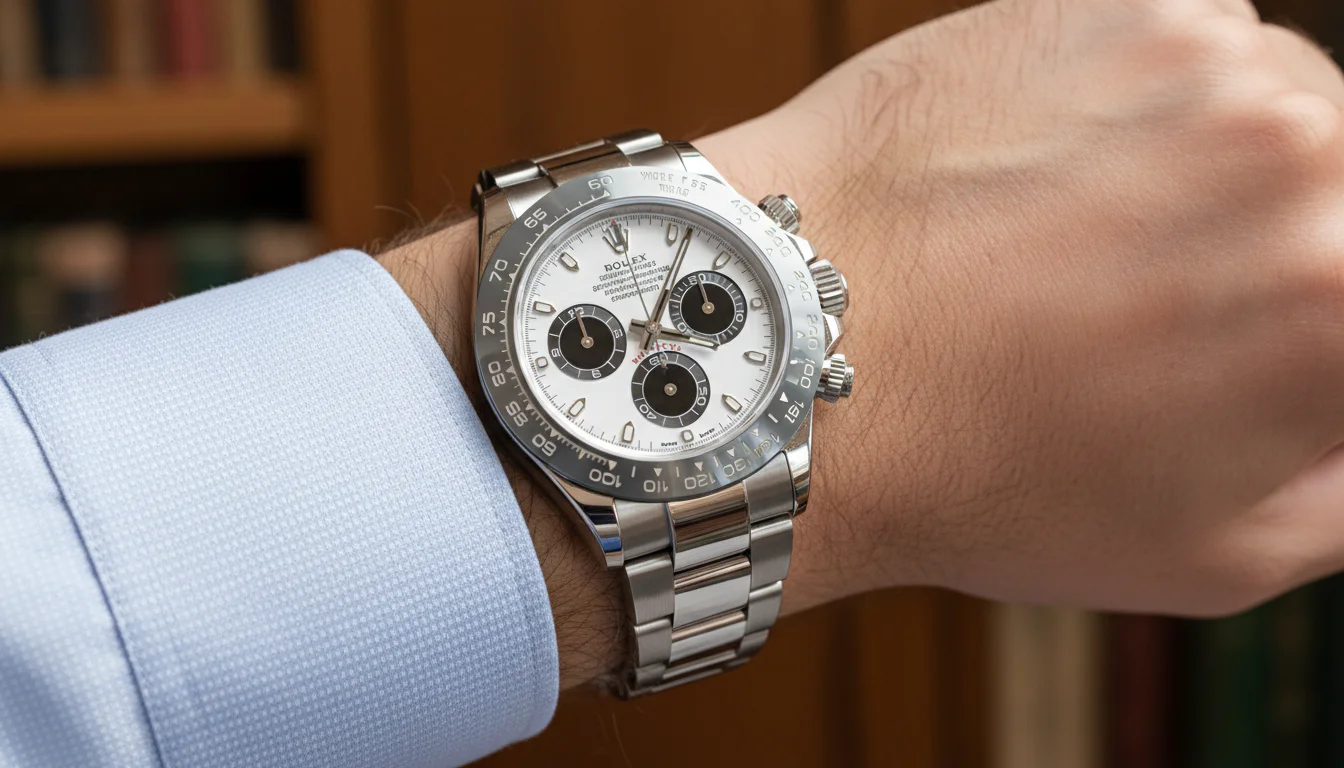 The Rolesium Daytona on wrist. From a distance, it reads as a standard steel Daytona. Up close, the platinum bezel coating, anthracite ceramic, and grand feu enamel dial all reveal themselves.
In normal indoor lighting, the watch looks predominantly steel with darker bezel ceramic. In direct sunlight, the platinum coatings on the bezel numerals and the platinum framing around the caseback become noticeable. This is by design. Rolex sport watches generally avoid being visually loud, and the Rolesium fits that pattern.
The grand feu enamel dial reads slightly warmer than a lacquered white dial. The depth of the enamel firing produces a subtle cream undertone that lacquered dials cannot replicate.
Why this is part of "Exceptional Watches"
Rolex's catalog has three production tiers.
- Standard catalog references: in continuous production, broadly available through authorized dealers (e.g., Submariner 126610LN, GMT-Master II 126710BLNR, Daytona 126500LN)
- Off-catalog references: shown but not listed on rolex.com, often gem-set or unusual material configurations
- Exceptional Watches: a designated tier of low-production, technically distinctive pieces (e.g., the Rolesium Daytona, the Jubilee Gold Day-Date)
Per WatchesOff5th's W&W 2026 coverage, the Rolesium Daytona joining "Exceptional Watches" means production will be intentionally constrained. Rolex has not published unit volumes, but the precedent for similar tier placement suggests a few hundred to a couple thousand pieces per year globally.
This is the structural reason secondary market premiums on this reference will be substantial. There is not enough supply to satisfy demand at retail.
What it means for the Daytona market
Three downstream effects are likely.
1. Supports pricing on the standard 126500LN
The Rolesium variant is not a replacement for the standard Daytona. It is a tier above. Buyers who could not land a Rolesium will move to the standard Panda 126500LN as the next-best option, which keeps demand pressure on the existing reference.
2. The grand feu enamel dial sets a new collector category
Other Rolex sport references could plausibly receive enamel dial treatments in coming years. The Submariner has never had an enamel dial in modern production. The GMT-Master II has not either. If the Rolesium is the proof-of-concept, expect Rolex to expand enamel into adjacent sport references over the next 3-5 years.
3. The sapphire caseback precedent matters
Rolex breaking its own caseback rule is not a small thing. It signals that the brand will reconsider design conventions when warranted. Watch the next two years of Rolex releases for additional sport references with exhibition casebacks. The Yacht-Master II already adopted a related design philosophy with its 2026 redesign.
Should you buy one
This depends entirely on what you can actually access.
If you have an authorized dealer relationship
You probably cannot buy one. Exceptional Watches allocations are reserved for Rolex's most established VIP clients and long-tenured retailers. Most retail buyers will not be offered one.
If you find one on the secondary market
Premium expectations are high. Likely 2-3x retail in the first year, possibly more depending on demand stabilization. A defensible buy if you specifically want the grand feu enamel dial and the sapphire caseback. Not a defensible flip play because the secondary market for these tier pieces is shallow and premiums can compress quickly.
If you want a steel Daytona without the Rolesium premium
The standard 126500LN Panda at $16,900 retail and $30,000-$45,000 secondary remains the right answer. It is the same caliber 4131 movement, the same 40mm Oystersteel case, and the same overall Daytona experience. You give up the grand feu dial and the sapphire caseback. You keep the actual watch.
For the broader buying framework on Rolex sport watches, see our authentication checklist and our watches that hold their value analysis.
The dealer's take
The Rolesium Daytona is the headline grail piece of 2026, but it is not the answer for most buyers walking into a Daytona purchase. Production is too limited, retail allocations are too constrained, and secondary market premiums will be too elevated for the first 12-18 months.
The Rolesium is significant because of what it signals about Rolex's design willingness, not because most buyers will end up with one. The watch matters. The precedent matters more.
For most Daytona buyers, the standard 126500LN Panda remains the intelligent choice. It is the most liquid steel chronograph in the world, and the discount to a Rolesium is large enough that the trade-off is genuinely favorable.
For broader 2026 Rolex context, see our every Rolex discontinued at W&W 2026 post. For our framework on first Rolex sport watch decisions, see Submariner vs GMT-Master II.
Browse our authenticated pre-owned Rolex Daytona inventory at 5dwatches.com/shop/rolex. Every piece includes movement inspection, condition documentation, and full authentication before we list it.